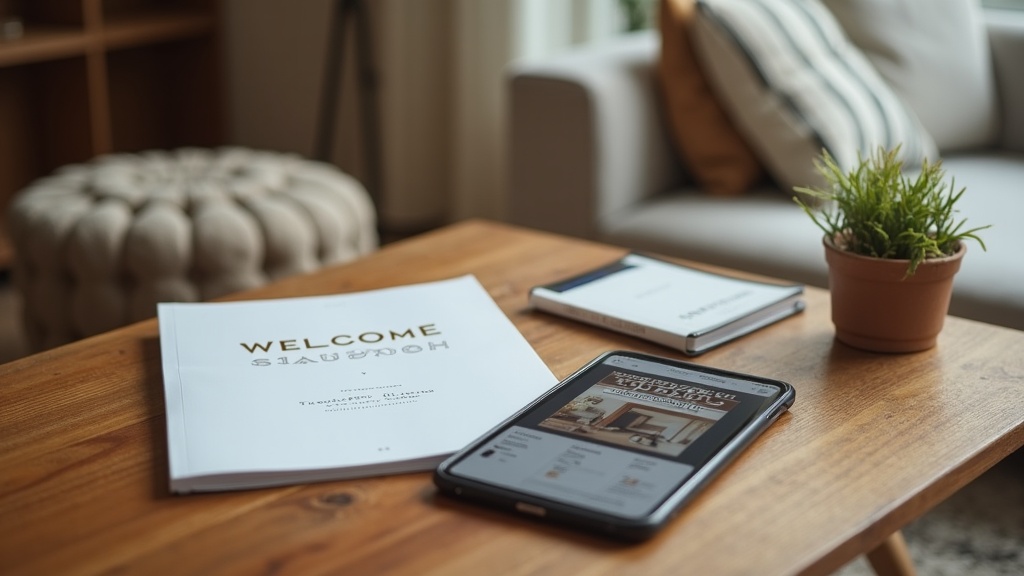
Transparency: LetGrow publishes this blog, and LetGrow is one of the tools compared below. We've kept the comparison factual and flagged where rivals are genuinely the better fit — but read it with that context in mind.
The traditional Airbnb welcome book — a printed booklet on the kitchen counter — still works, but it's competing with five better alternatives that work harder. Here's how the main options compare in 2026, and which suits which host.
The 5 Best Airbnb Welcome Book Alternatives
1. Digital Guidebooks (Best Overall)
A modern digital guidebook (like LetGrow) is a mobile-first web page your guests open on their phone. It has local recommendations, check-in instructions, house rules, WiFi, transport info, and — critically — an upsells tab so you can sell late checkout, early check-in, welcome hampers, and airport transfers without lifting a finger.
Why it wins over a PDF: editable instantly when something changes (new WiFi password, updated parking rules), measurable (you can see which sections guests open), and it earns you money back through upsells. £14 once is cheaper than a single printed booklet.
2. Canva Template PDF (Best Free Option)

Canva has hundreds of free Airbnb welcome book templates. Download, fill in, export as PDF, email to guests. Genuinely free for most templates.
Downsides: every change requires re-export and re-send. No interactivity (guests can't tap a link to add late checkout). No tracking. Looks like a PDF, not a premium experience.
Use if: budget is genuinely zero and you only have one or two listings to maintain.
3. Touch Stay (Best Established Subscription)
Touch Stay is the longest-running digital guidebook product. Polished editor, UK-based, well-known. Costs around £99/year per property — over five years you'll spend ~£500 per property compared to LetGrow's £14 once.
Use if: you're a property manager running many listings and want the most-established brand.
4. Printed Booklet (Best Tactile Experience)
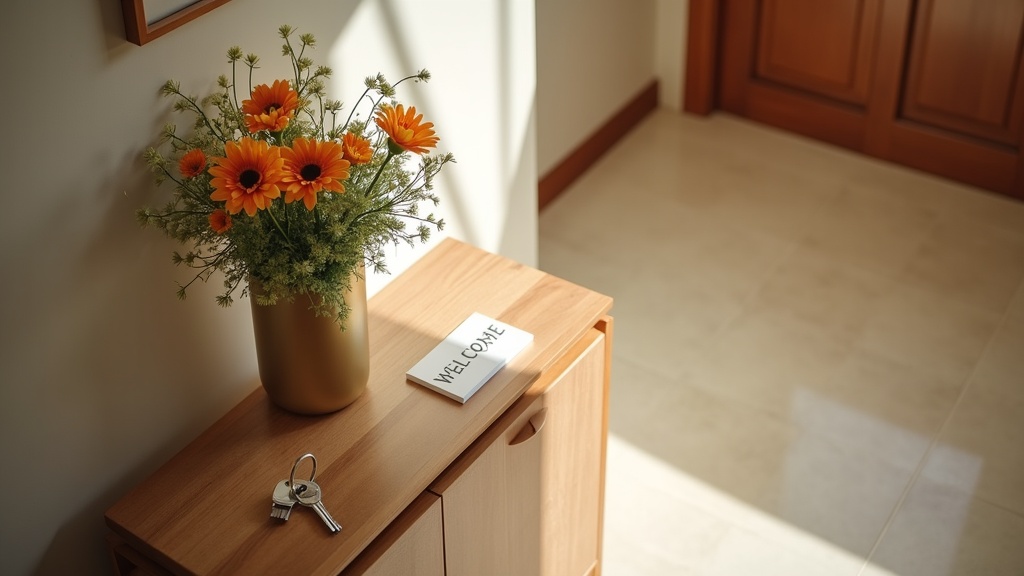
A beautifully designed printed booklet on the coffee table is genuinely lovely. Some guests still prefer paper.
Downsides: expensive to update (every WiFi change is a reprint), no upsells, no measurement, no shareability (guests can't access it before arrival or after they leave). Most hosts now pair a printed booklet with a digital one — printed for ambience, digital for actual usefulness.
5. Notion or Google Docs Link (Best DIY Free)
Create a Notion page or Google Doc with all your information, set it to public, send the link to guests. Free, editable, shareable.
Downsides: looks like a Google Doc. No upsells. No mobile-optimised design. Most guests don't engage with it because it doesn't look intentional.
Why the Digital Guidebook Wins for Most Hosts
Three reasons:
- Money back. Built-in upsells pay back the £14 cost on the first late checkout sale. Over a year, most hosts net £100–£400 from upsell revenue they previously left on the table.
- Time back. Guests stop asking the same questions ("WiFi password?", "where do I park?") because the answer's already there. Hosts using one report 60–80% fewer pre-arrival messages.
- Reviews back. Better information = better stays = better reviews. Hosts using a comprehensive digital guidebook typically lift their review average by 0.2–0.4 stars.
Get your digital guidebook for £14 →
The Pragmatic Pick
If you want the cheapest fully-featured option, LetGrow's £14 one-off beats every subscription on cost and matches them on features.
If you want the most-established brand, Touch Stay is the safe choice but expect ~£99/year.
If your budget is genuinely zero and you'll do the work yourself, a Canva PDF template gets you a basic welcome book free.