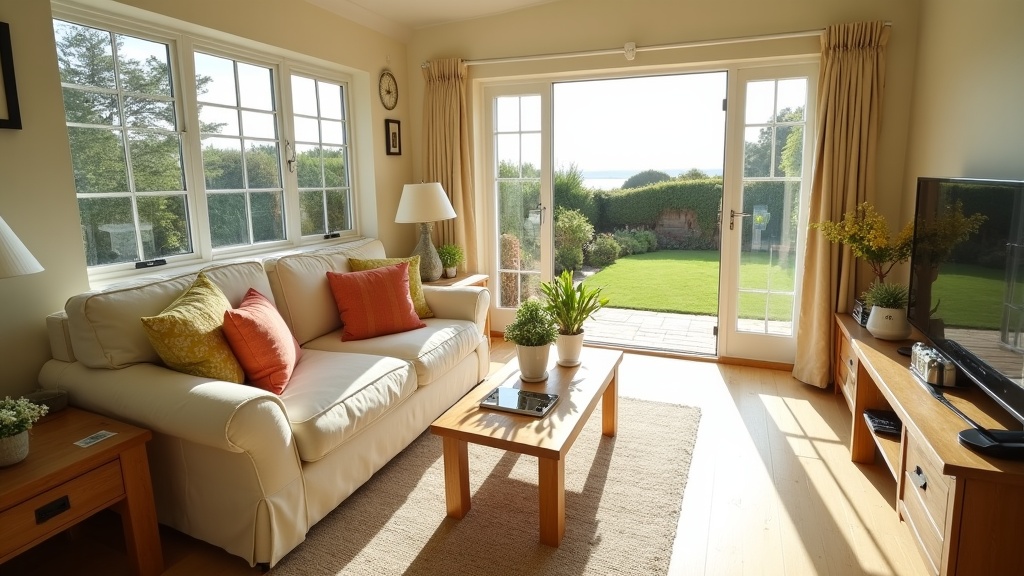
Why July is the most expensive month to get wrong with your Airbnb summer holiday pricing
July is peak season for UK short-term rentals — school holidays have arrived, families are booking week-long stays, and nightly rates can comfortably double. Yet most hosts leave thousands of pounds on the table by treating July like a slightly busier June. The difference between a good July and a brilliant one often comes down to understanding the rhythm of school holiday booking behaviour and pricing accordingly.
In this guide, we'll walk through exactly how to structure your Airbnb summer holiday pricing for July 2026, when to raise rates, how to balance occupancy with revenue, and the mistakes that quietly cost hosts bookings during the most profitable month of the year.
When do families actually book their July holidays?
Most families book their summer holidays in two waves: January to March (the early planners securing prime dates and larger properties) and late May to early June (last-minute bookers chasing deals or waiting for term dates to be confirmed). This split creates a pricing window most hosts miss entirely.
If you're still adjusting your July rates in mid-June, you've already lost the high-paying early bookers. The secret is to have your peak rates live by February at the latest, then use strategic last-minute discounts in late June to fill any gaps. For a detailed breakdown of how to structure pricing across the full summer season, read our Airbnb summer pricing strategy guide covering May to August.
The two-tier booking pattern
Early bookers (January–March) are typically willing to pay a premium for:
- Properties that sleep 6+ guests (multi-generational holidays)
- Listings with gardens, parking, or pet-friendly policies
- Coastal, countryside, or attraction-adjacent locations
- Confirmed availability for the full week (Saturday to Saturday)
Late bookers (late May–June) are often more price-sensitive but flexible on dates. They're comparing your listing against dozens of others, so competitive positioning matters more than amenities. Your pricing strategy needs to reflect both audiences.
How to structure your Airbnb summer holiday pricing for July 2026

July pricing isn't one flat rate for 31 days. School term dates, weekends, and the infamous 'changeover Saturday' all demand different approaches. Here's how to break it down:
1. Identify your peak weeks
In 2026, most English schools break up around Friday 17th July, with Scottish schools finishing earlier (late June) and some regions varying by a few days. The highest demand falls on:
- Saturday 18th July – Saturday 25th July (first full week of English school holidays)
- Saturday 25th July – Saturday 1st August (peak family travel week)
These two weeks should command your highest rates — typically 30–50% above your June weekend rate. If your June Saturday rate is £150, your peak July Saturday should be £195–225. Don't be timid here; families expect July to cost more, and underpricing signals poor quality.
2. Set a minimum stay for peak dates
One-night bookings during peak July weekends are revenue killers. A family checking in on Saturday 18th and out on Sunday 19th blocks your entire peak week from a high-value 7-night booking. Set a 5–7 night minimum stay for arrivals between 15th–20th July. You'll lose a handful of short bookings but gain exponentially more from week-long family stays.
3. Price the shoulders differently
Early July (before schools break up) and late July (after the first rush) still benefit from summer demand, but they're not peak. Consider:
- 1st–17th July: 15–25% above your June rate (couples, child-free households, retired travellers)
- 26th July–31st July: Hold peak rates if bookings are strong; drop 10–15% if you have gaps by mid-July
If you're juggling multiple pricing variables and want an expert assessment of where your listing stands, LetGrow's free Airbnb performance score analyses your pricing strategy, competitor positioning, and occupancy trends with specific recommendations.
The biggest mistake hosts make with peak season pricing
Raising rates too slowly. Many hosts inch their prices up week by week, hoping to 'test the market' without scaring off bookings. By the time they reach a genuinely competitive peak rate, the early bookers have already committed elsewhere.
Airbnb's algorithm favours listings that convert searches into bookings. If your listing is underpriced in February, you'll get a flood of enquiries and bookings — which signals strong demand to the algorithm. But you've locked in dozens of nights at below-market rates, and by the time you raise prices in May, your calendar is already half-full with low-revenue bookings. You've traded ranking visibility for profit.
The fix: price high early, discount strategically later
Set your July rates ambitiously in January. If bookings are slow by April, you can always add a 10% early-bird discount or offer a 'book 7 nights, get 5% off' deal. But if you start low, you can't retrospectively raise rates on existing bookings — you're locked in. For more on balancing occupancy and revenue during the holiday periods, see our guide to seasonal pricing for Easter and spring bookings, which applies the same principles to a different peak window.
Weekend vs weekday pricing in July: does it still matter?

During school holidays, the traditional weekend premium flattens. Families booking a week-long stay don't care if Tuesday is cheaper than Saturday — they're paying for the full week regardless. Your pricing should reflect weekly booking behaviour, not weekend surges.
However, if you're not getting week-long bookings and your calendar is filling with 2–3 night stays, you may need to adjust. In that scenario:
- Keep Friday–Sunday rates 15–20% higher
- Offer midweek discounts (Monday–Thursday) to attract couples or remote workers extending a weekend break
- Monitor your average length of stay — if it's under 4 nights in July, your pricing or minimum stay settings may be pushing families away
Not sure how your listing compares to competitors in your area? Get your free listing score from LetGrow and see how your nightly rate, occupancy, and booking patterns stack up against similar properties nearby.
Should you offer weekly discounts during July?
Conventional wisdom says no — demand is high, so why discount? But a modest weekly discount (5–7%) can be the difference between a booked calendar and a patchy one, especially for larger properties competing against holiday cottages and group accommodation.
Here's why it works: families are comparing your total price (7 nights × nightly rate) against package holiday costs, Vrbo listings, and traditional cottage rentals. A £150/night property costs £1,050 for the week. Add a 7% weekly discount, and it drops to £976 — a psychological threshold that feels meaningfully cheaper without gutting your revenue.
When NOT to offer weekly discounts
If your calendar is already 70%+ booked by April, you don't need discounts — demand is strong enough. Weekly discounts are a tool for filling gaps, not a permanent fixture. Turn them off once occupancy hits 80% or you're within 30 days of arrival.
How festivals and local events change July pricing
July isn't just school holidays. Depending on your location, you may have:
- Music festivals (Latitude, Tramlines, Cambridge Folk Festival)
- Sporting events (Wimbledon finals, British Grand Prix, Test cricket)
- Agricultural shows (Royal Welsh Show, Great Yorkshire Show)
- Coastal regattas and harbour festivals
These events create hyper-localised demand spikes that justify rates 50–100% above your baseline July pricing. A listing 10 miles from the British Grand Prix can charge £250/night for that weekend, even if your typical July rate is £120. The key is knowing your local event calendar and adjusting pricing 6–8 weeks in advance. For a deep dive into event-based pricing strategy, read our guide on premium rates during festival and event season.
What to do if your July bookings are slow by May
If you're heading into June with a half-empty July calendar, don't panic — but do act. Here's your recovery plan:
1. Check your competition
Search Airbnb as a guest for your area, dates matching your availability, and guest count matching your property size. Sort by price. Where do you sit? If you're in the top 25% most expensive, your pricing may be disconnected from market reality. If you're in the bottom 25%, your listing likely has a quality or presentation issue — not a pricing one.
2. Add a last-minute discount
Airbnb allows you to set a discount for bookings made within 7, 14, or 28 days of arrival. A 10% last-minute discount can capture the late-booking segment without devaluing your listing for future searches. Just make sure to turn it off once bookings pick up.
3. Audit your listing presentation
Slow bookings during peak season often point to listing issues, not pricing. Check:
- Is your title keyword-rich and specific? ('Coastal 3-Bed with Parking & Sea Views' beats 'Lovely Holiday Home')
- Are your first 3 photos showcasing your best features? (Living room, hero bedroom, unique selling point)
- Have you listed all relevant amenities? (Parking, garden, workspace, coffee maker — even a £15 cafetière qualifies as 'coffee maker' on Airbnb and helps you appear in filtered searches)
- Does your description answer the question: why is this property perfect for a family holiday?
If you'd like a professional eye on your listing, LetGrow analyses your title, photos, pricing, and amenities for free and shows you exactly what's holding your listing back — no obligation, just actionable insights.
How dynamic pricing tools handle July (and why you should still check manually)
Many hosts rely on dynamic pricing tools like PriceLabs or Wheelhouse to automate their rates. These tools are excellent for smoothing out seasonal trends and reacting to demand signals, but they often underprice July because they're calibrated to maximise occupancy, not revenue.
Dynamic pricing algorithms typically:
- Increase rates gradually as occupancy rises
- Drop rates aggressively if bookings slow
- Smooth out extreme peaks to avoid 'scaring off' guests
During July, this conservative approach can cost you. A human host knows that a family will pay £200/night for a peak week because alternatives are scarce. An algorithm sees £200 as an outlier and nudges it down to £175 to 'improve competitiveness'. Always set manual overrides for your peak July weeks.
For a detailed comparison of pricing tools and how they stack up for UK hosts, check out our Airbnb pricing tools comparison.
Smart calendar management for July bookings
Pricing is only half the equation. How you manage your calendar — minimum stays, check-in rules, and availability windows — directly impacts your July revenue.
The Saturday changeover rule
Most family holidays run Saturday to Saturday. If you allow flexible check-ins, you risk a 3-night booking (Wednesday–Saturday) blocking a full 7-night booking (Saturday–Saturday). For peak July weeks, enforce Saturday-only check-ins and check-outs. You may lose a handful of midweek bookings, but you'll capture the higher-value weekly stays.
The 'orphan night' problem
Imagine your calendar: a booking ends on Friday 24th July, and your next booking starts Sunday 26th. That single Saturday night is now unbookable for weekly guests and unappealing for one-night stays. Use a 2-night minimum for any gaps under 3 nights, and consider offering a small discount to bridge these gaps in June.
July 2026 dates to mark in your calendar now
Set reminders to review your pricing and availability on these dates:
- 1st February 2026: Ensure July rates are live and peak weeks have minimum stays enabled
- 1st April 2026: Review bookings to date; adjust rates for any remaining gaps
- 1st June 2026: Activate last-minute discounts if occupancy is below 70%
- 10th July 2026: Final check for orphan nights or short-stay opportunities in late July
Common July pricing questions from UK hosts
Should I charge more for bank holidays in July?
There are no UK bank holidays in July, so you don't need to adjust for them. However, if your listing is popular with international guests (especially European visitors), the first two weeks of July often coincide with European school holidays, which can increase demand for city-centre and tourist-area properties.
Is it better to stay booked at a lower rate or hold out for premium bookings?
It depends on your financial goals and risk tolerance. A booked night at £120 is better than an empty night at £180 — but only if that £120 booking doesn't block a £180 opportunity. If you're within 14 days of arrival and the night is empty, drop your rate. If you're 60 days out and holding firm, give it time.
How do I price a property that's new to Airbnb for July?
New listings benefit from Airbnb's 'new listing boost' in search rankings, but you don't yet have reviews to justify premium pricing. Price competitively (middle of the pack) for your first July, focus on earning 5-star reviews, then raise rates significantly for the following year. The reviews you earn in July 2026 will pay dividends in 2027.
Frequently Asked Questions
What is the best nightly rate for July Airbnb bookings in the UK?
There's no universal answer — it depends on property type, location, and amenities. As a rule of thumb, peak July rates should be 30–50% higher than your June rate. Coastal and countryside properties can command the highest premiums, while city-centre listings may see smaller uplifts unless near major attractions or events.
When should I start setting my July Airbnb prices?
No later than February. Early-booking families begin searching in January, and you want your peak rates live before the first wave of bookings. Waiting until May or June means you've already missed the highest-paying guests.
Should I lower my prices if my July calendar isn't filling up?
Not immediately. First, audit your listing quality — photos, title, amenities, and description. If those are strong and you're still not getting bookings by late May, consider a modest 10% last-minute discount or a small weekly discount rather than slashing your nightly rate.
Do I need a minimum stay requirement for July bookings?
Yes, especially for peak weeks (mid-to-late July). A 5–7 night minimum prevents short bookings from blocking high-value weekly stays. For early July (before schools break up), a 3-night minimum is often sufficient.
How does Airbnb's algorithm treat higher July pricing?
Airbnb's algorithm doesn't penalise higher pricing if it's in line with local demand. In fact, listings that convert searches into bookings at higher rates often rank better because Airbnb earns more per booking. The key is ensuring your listing quality justifies the price.
Can I change my July prices after I've already received bookings?
No — once a guest has booked, the rate is locked. This is why it's crucial to set ambitious pricing early. You can always discount later, but you can't increase rates on confirmed bookings.
Your July pricing checklist
Before you close this tab, here's what to do in the next 48 hours:
- Review your July calendar and identify your peak weeks (typically mid-to-late July)
- Set nightly rates 30–50% above your June baseline for peak dates
- Enable 5–7 night minimum stays for arrivals during school holiday weeks
- Enforce Saturday check-in/check-out rules for peak weeks
- Check for local events (festivals, sports, shows) and price those weekends separately
- Set calendar reminders for February, April, and June to review progress
- Audit your listing presentation (title, photos, amenities) to ensure it justifies peak pricing
July is the month that defines your entire summer revenue. Get your pricing and calendar strategy right, and a single week can earn what three off-season weeks might bring. Get it wrong, and you'll watch competitors fill their calendars while yours sits half-empty.
If you'd like an expert assessment of how your listing is positioned for peak season, get your free Airbnb listing score from LetGrow — it takes two minutes and gives you a clear breakdown of where you're strong and where you're leaving money on the table.