
You've got great reviews, solid photos, and a competitive nightly rate—so why is the flat next door booked twice as often as yours? The answer lies in benchmarking, and most hosts have no idea where they actually stand against local competitors. Without hard data, you're guessing—and every guess is costing you bookings.
Learning how to benchmark your Airbnb listing isn't about obsessing over your neighbours. It's about identifying the precise gaps between your performance and theirs, then closing them systematically. This guide walks you through the exact metrics to track, how to interpret them, and—most importantly—how to spot the quiet revenue leaks that benchmarking reveals.
What Does It Mean to Benchmark Your Airbnb Listing?
Benchmarking your Airbnb listing means comparing your performance metrics—occupancy rate, average daily rate, revenue, booking lead time, review scores—against similar properties in your area. It reveals whether you're underpricing, under-delivering on amenities, or losing bookings to avoidable listing weaknesses.
Think of it as a competitive health check. You're not just looking at your numbers in isolation—you're measuring them against the market standard. A 60% occupancy rate might sound respectable until you discover comparable listings in your postcode are hitting 80%. That 20-point gap represents real money left on the table.
Effective benchmarking requires three things: the right competitors (similar size, style, location), the right metrics (not just revenue—more on this below), and regular tracking. One-off comparisons miss seasonal shifts and competitor improvements. Monthly or quarterly snapshots show you whether you're gaining ground or falling behind.
Why Most Hosts Never Benchmark Properly (and Pay for It)
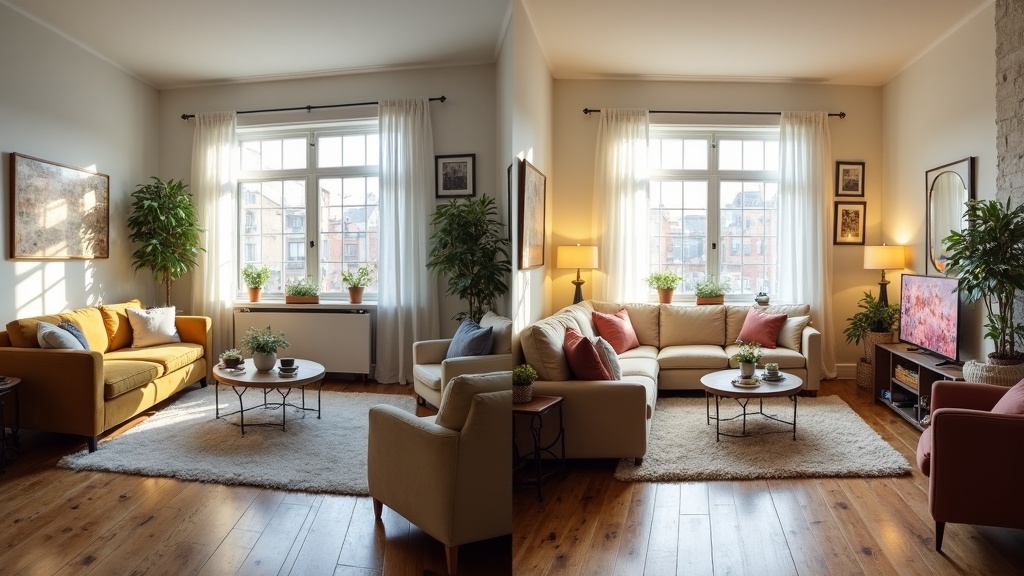
The biggest mistake? Picking the wrong comparison set. Hosts often benchmark against aspirational listings—the designer loft with the roof terrace and five-star reviews—rather than realistic peers. Comparing your two-bedroom terrace to a luxury penthouse tells you nothing actionable.
Others rely solely on Airbnb's internal search ranking as a proxy for performance. But search position is a black box influenced by dozens of factors (response time, cancellation history, booking velocity) you can't directly observe in competitors. You need hard metrics: occupancy, pricing strategy, amenity coverage, review volume and sentiment.
Then there's the data problem. Airbnb doesn't publish occupancy rates or revenue figures for other hosts. You're left eyeballing calendars manually or relying on incomplete guesswork. This is where structured competitor analysis tools like LetGrow become essential—they surface the data Airbnb hides, so you can benchmark with confidence rather than hunches.
The 6 Core Metrics You Must Track to Benchmark Your Airbnb Listing
Not all metrics matter equally. These six give you the clearest picture of where you stand—and where the money's hiding.
1. Occupancy Rate
Occupancy rate is the percentage of available nights you're actually booked. It's the single most reliable indicator of competitive strength because it's harder to manipulate than pricing. A host can drop their rate to £50 and claim they're 'fully booked', but sustained high occupancy at market rates signals genuine demand.
Track your occupancy monthly and compare it to 3-5 direct competitors (same property type, bedroom count, neighbourhood). If theirs is consistently 15-20 points higher, something structural is wrong—usually pricing, photos, title optimisation, or amenity gaps. For detailed guidance on identifying and analysing your true competitors, see our guide on how to find Airbnb competitors in your area.
2. Average Daily Rate (ADR)
Your ADR is your total revenue divided by nights booked. It reflects what guests actually pay after discounts, not your headline nightly rate. If your calendar says £100/night but your ADR is £78, you're offering heavy discounts to fill gaps—a sign of weak demand or poor positioning.
Compare your ADR to competitors with similar star ratings and review counts. If theirs is 20% higher with comparable occupancy, they're either offering better perceived value (nicer photos, stronger description, standout amenity) or they've nailed their pricing strategy (weekend uplifts, seasonal adjustments, minimum stay requirements).
3. Review Score Distribution
Overall star rating matters, but the breakdown by category (cleanliness, accuracy, communication, location, check-in, value) is where benchmarking gets surgical. If competitors score 4.9 on cleanliness and you're at 4.6, guests are noticing something—and it's costing you conversions.
Pull the last 20 reviews from 3-4 peer listings. What are guests raving about? What's conspicuously absent from your reviews? If every competitor mentions fast WiFi, a well-equipped kitchen, or thoughtful welcome touches, and your reviews don't—that's your gap.
4. Amenity Coverage vs. Market Standard
This one's binary and brutal: do you offer what the market expects? If 80% of comparable listings in your area include free parking, a coffee maker, and a washing machine, and you're missing two of those, you're invisible to filtered searches. Guests tick those boxes before they ever see your beautiful photos.
Run an amenity audit: list every feature your top 5 competitors offer that you don't. Prioritise the cheap, high-impact ones first. A £15 cafetière (which counts as 'Coffee Maker' on Airbnb's amenity list) can unlock hundreds of filtered search impressions monthly. A £25 hairdryer does the same. These aren't luxuries—they're table stakes.
5. Response Rate and Response Time
Airbnb weighs these heavily in search ranking, but they're also a proxy for professionalism. If competitors respond to 95% of enquiries within an hour and you're at 80% within six hours, they're winning bookings before you've even opened the app.
Check your dashboard stats and compare them to Airbnb's published benchmarks for Superhosts (90%+ response rate, median response time under 1 hour). If you're lagging, activate instant booking or set up saved replies for common questions. Every percentage point of response rate improvement lifts your search visibility.
6. Photo Quality and Sequence
This one's subjective but measurable by proxy: how many photos do competitors have, and what do they show first? If the market standard is 25+ images with a bright, wide-angle living room shot as the hero, and you've got 12 photos starting with a closeup of a cushion, you're haemorrhaging click-throughs.
Photo benchmarking isn't about hiring a photographer (though that helps). It's about coverage: do you show every room, every angle, every value-add (parking, outdoor space, workspace)? Are your first five photos as strong as theirs? If not, optimising your photo sequence and coverage is a zero-cost, high-return fix.
How to Actually Benchmark Your Airbnb Listing (Step-by-Step)

Here's the process that turns benchmarking from theory into actionable intel.
Step 1: Identify Your True Competitors
Search Airbnb as a guest. Use your property's location, bedroom count, and typical search dates (say, a Friday-Sunday two months out). Your competitors are the listings that appear on the same search results page, with similar pricing, ratings, and property type. Ignore the penthouse six times your size—it's not stealing your bookings.
Shortlist 3-5 properties. Save their URLs. These are your benchmark set.
Step 2: Build a Simple Tracking Spreadsheet
Create columns for: Listing Name, Occupancy Rate (next 30 days), Weeknight Rate, Weekend Rate, Total Reviews, Overall Rating, Cleanliness Score, Amenity Count, Response Rate, Photo Count. Update this monthly.
For occupancy, manually scan their calendars and count blocked dates (assume blocked = booked). Yes, it's tedious—this is why hosts who use tools like LetGrow's automated competitor analysis save hours every month.
Step 3: Analyse the Gaps
Sort your spreadsheet by each metric. Where do you rank? If you're bottom-third on occupancy but top-third on price, you're overpriced. If you're top-third on occupancy but bottom-third on ADR, you're underpriced (or over-discounting). If you're mid-pack on everything, you're invisible—you need a standout feature or aggressive optimisation to break through.
Look for clustering. If four out of five competitors have 4.95+ overall ratings and you're at 4.78, that's not bad luck—it's a signal. Dig into your recent reviews: what's the recurring friction point?
Step 4: Prioritise High-Impact Fixes
Not all gaps are equal. Rank your findings by ease + impact. Missing a coffee maker? That's a £15, 10-minute fix with immediate filter search benefits. Underpricing by 20%? That's a 5-minute calendar update with potential 4-figure annual upside. Poor hero photo? That's a 30-minute reshoot with your phone and measurably higher click-through rates.
Contrast that with 'my location score is lower'—you can't fix geography. Focus relentlessly on the controllable variables.
Step 5: Re-Benchmark Every 4-6 Weeks
Competitive landscapes shift. A new listing opens next door with better photos. A competitor drops their rate. Seasonal demand changes everything. Static benchmarks are useless. Set a recurring calendar reminder to update your tracking sheet and adjust your strategy accordingly.
If this sounds time-intensive, it is—unless you automate it. This is precisely what LetGrow's competitor analysis module does: tracks occupancy, pricing patterns, and amenity gaps automatically, so you're always working from fresh data. Get your free Airbnb listing score to see where you stand today.
The Biggest Benchmarking Mistakes (and How to Avoid Them)
Comparing Revenue Without Context
You can't accurately compare absolute revenue between listings—you don't know their costs, discounts, or minimum stay rules. Instead, compare occupancy at similar price points. If a competitor books 80% of nights at £90 and you're booking 55% at £95, the problem isn't revenue—it's demand.
Ignoring Seasonality
Benchmarking your July occupancy against a competitor's February occupancy is meaningless. Always compare like-for-like periods. Use rolling 30-day windows or compare the same month year-on-year.
Benchmarking Only Once
One snapshot tells you where you are. A series of snapshots tells you whether your changes are working. If you add amenities, retake photos, and rewrite your title in March—then re-benchmark in April and see no movement—you've either picked the wrong fixes or your competitors improved too. Continuous tracking is essential.
Forgetting About New Listing Boosts
Airbnb gives new listings a temporary ranking boost for their first few bookings. If a competitor launched last month and has 90% occupancy, don't panic—they're riding the new-listing wave. Check back in 60 days to see if they sustain it. Compare yourself to established listings (6+ months old, 20+ reviews) for realistic benchmarks.
What to Do Once You've Benchmarked Your Airbnb Listing
Benchmarking reveals the gaps. Now you fix them, in order of impact.
If you're underperforming on occupancy: Audit photos, title, and amenities first. These control your click-through and conversion rates. Low occupancy is almost always a visibility or appeal problem, not a pricing problem (unless you're wildly overpriced). For a full breakdown of how to improve your listing score and what each element means, read how to interpret and act on your Airbnb listing score.
If your ADR lags competitors: You're either discounting too aggressively or underpricing your base rate. Check if you're offering weekly/monthly discounts competitors don't. Remove or reduce them. Test a 10-15% weekend rate increase and monitor booking velocity. If occupancy holds, you've found found free revenue.
If your reviews are lower: Read competitors' 5-star reviews. What are guests praising? 'Spotless', 'responsive', 'great communication', 'thoughtful touches'—these aren't accidents. They're repeatable systems. Implement a cleaning checklist. Pre-write template messages for common questions. Add a welcome basket or local guidebook. Small gestures compound into higher ratings.
If your amenity coverage is weak: Make a shopping list. Prioritise anything that unlocks filter search visibility (coffee maker, hairdryer, iron, workspace essentials if you have a desk). Budget £100-200 for a one-time amenity upgrade—it pays for itself in a single extra booking.
If your response metrics are poor: Turn on Instant Book (if you're comfortable with it) or commit to checking messages every 2-3 hours during waking hours. Set up the Airbnb app on a tablet and leave it logged in. Response rate and speed directly affect search ranking—improving them is non-negotiable.
How LetGrow's Benchmarking Tools Save You Hours Every Month
Manual benchmarking works, but it's slow, incomplete, and hard to sustain. You're scanning calendars by hand, guessing at occupancy, screenshotting competitor pricing, and hoping you didn't miss a key amenity buried in a long description.
LetGrow automates the entire process. Our platform analyses your listing against local competitors in seconds, surfacing occupancy patterns, pricing gaps, missing amenities, photo weaknesses, and SEO opportunities—everything this article describes, delivered as a prioritised action plan.
You'll see exactly where you rank on every metric that matters, which competitors are outperforming you (and why), and what to fix first. No spreadsheets, no guesswork, no wasted hours. Just clear, data-driven insights you can act on today. Start with a free listing score—it takes 60 seconds and shows you precisely where the revenue leaks are hiding.
FAQs: Benchmarking Your Airbnb Listing
How often should I benchmark my Airbnb listing?
Benchmark your listing every 4-6 weeks, or after making significant changes (new photos, pricing adjustments, amenity additions). Monthly tracking helps you spot trends, measure the impact of optimisations, and stay ahead of competitor improvements or new local listings entering the market.
What's a good occupancy rate for an Airbnb in the UK?
UK Airbnb occupancy rates vary widely by location and season, but 60-75% is typical for established listings in competitive markets. Urban listings often hit 70-85%, while rural or seasonal properties may see 40-60%. Always compare against your specific local competitors rather than national averages—market dynamics differ dramatically between cities.
Can I see other hosts' occupancy rates on Airbnb?
No, Airbnb doesn't publish other hosts' occupancy rates or revenue data. You can manually estimate occupancy by scanning a competitor's calendar and counting blocked (booked) nights, but this is time-consuming and imprecise. Listing optimisation tools like LetGrow track competitor occupancy automatically, saving hours of manual work.
What if I'm underperforming on every metric?
Start with the fastest, highest-impact fixes: add missing amenities that unlock filter searches (coffee maker, hairdryer, workspace), rewrite your title to include location and standout features, and reorder your photos so the best image is first. These changes cost little and often deliver immediate visibility and conversion improvements. For a structured approach, see what makes a good Airbnb listing score and which elements to prioritise.
Should I lower my price if competitors have higher occupancy?
Not necessarily. Higher competitor occupancy at the same price point suggests they're winning on appeal (photos, reviews, amenities, listing copy)—not price. Dropping your rate without fixing those issues leaves money on the table. Audit your listing quality first, then test modest price adjustments if occupancy doesn't improve.
Do I need to benchmark against Superhosts?
Only if they're true competitors (same property type, size, location, and price range). Superhost status gives a small ranking boost, but it's earned through consistent performance—high response rate, low cancellations, strong reviews. If a Superhost listing similar to yours is outperforming you, study their reviews, amenities, and photos to identify learnable patterns.
Conclusion: Stop Guessing, Start Benchmarking
Every booking your competitor gets that you don't is a signal. Every pricing advantage they hold, every amenity gap you've left unfilled, every percentage point of occupancy they're ahead—those are all recoverable. Benchmarking turns those signals into a roadmap.
You don't need to outperform on every metric. You need to identify the one or two variables holding you back, fix them methodically, and re-benchmark to confirm it worked. That's how self-managing hosts beat the market without hiring expensive management companies—they measure, adapt, and improve relentlessly.
Ready to see how your listing measures up? Get your free Airbnb performance score at LetGrow and discover exactly where you stand against local competitors—and what to fix first.