You don't need expensive software subscriptions or a full management company to run a profitable Airbnb. Whilst the big operators are paying hundreds per month for automation tools, small UK hosts are quietly using free and budget-friendly alternatives that deliver nearly identical results — without the hefty price tag.
The myth that effective automation requires deep pockets is keeping thousands of self-managing hosts stuck in manual mode. The reality? Most tasks that eat up your time can be automated for under £10 per month, or completely free if you know where to look.
Why Affordable Airbnb Automation Matters for Small UK Hosts
Small hosts running 1-3 properties face a unique challenge: you need the efficiency of automation to compete with professional operators, but you can't justify enterprise-level software costs. A single property earning £15,000 annually can't support £100+ monthly tool subscriptions.
Budget automation levels the playing field. It frees you from repetitive tasks like sending check-in messages, adjusting prices daily, and manually screening guests — without sacrificing profit margins to expensive platforms or hiring a full management company.
The break-even test: if an automation tool costs £20 per month, it needs to save you at least two hours of manual work (at £10/hour value) or generate one extra booking to justify itself. The tools below clear that bar easily.
The 7 Budget-Friendly Airbnb Automation Tools UK Hosts Actually Use
These aren't theoretical recommendations. These are the specific tools small UK hosts rely on to automate their operations without burning through profits.
1. Smart Pricing That Doesn't Cost a Fortune
The challenge: manually updating your nightly rate to match demand, local events, and competitor pricing is time-consuming and usually leaves money on the table. Professional dynamic pricing tools like PriceLabs or Wheelhouse cost £20-40 per property per month.
The affordable alternative: Use Airbnb's built-in Smart Pricing as your baseline (it's free), but override it with manual weekend uplifts and seasonal adjustments based on competitor research. Spend 30 minutes per quarter setting rule-based discounts (weekly, monthly, last-minute) rather than paying for daily automation.
The middle ground: If you want true dynamic pricing without enterprise costs, LetGrow's pricing strategy analysis shows you exactly where your rates are underperforming and what your competitors are charging — without requiring ongoing subscription fees. You implement the recommended pricing structure once, then tweak it quarterly.
Cost: £0-9 (one-time analysis vs ongoing subscription)
2. Automated Guest Messaging Without the Monthly Fee
The challenge: sending check-in instructions, house rules reminders, and review requests manually to every guest drains hours each week. Dedicated messaging tools like Hospitable or YourPorter cost £15-25 per property monthly.
The affordable solution: Use Airbnb's native scheduled messages feature (free, built into your hosting dashboard). Set up templates for booking confirmation, pre-arrival (2 days before), check-in day, during stay (day 2), and post-checkout. These trigger automatically based on booking timeline.
Pro tip: combine scheduled messages with Airbnb's Quick Replies (saved message templates) for common questions. This covers 80% of guest communication automation without any third-party tools.
What you lose vs paid tools: you can't automate messages based on conditional triggers (e.g. 'if guest hasn't responded within 4 hours, send reminder'). But for straightforward communication, native scheduling works brilliantly.
Cost: £0
3. Listing Optimisation That Identifies Revenue Gaps
The problem: most hosts don't know whether their title, photos, or amenities are costing them bookings. Professional audits from consultants cost £200-500.
The budget fix: Use LetGrow's free listing performance score to identify exactly what's holding your listing back. It analyses your title structure, photo quality, amenity gaps, and pricing strategy against local competitors — then shows you precisely what to fix.
Unlike generic advice blogs, you get property-specific recommendations: 'Your listing doesn't appear in searches for coffee facilities because you haven't ticked Coffee Maker — a £12 cafetière qualifies' or 'Your hero photo is a bedroom, but 78% of top-ranked local listings lead with living room shots.'
For hosts who want deeper analysis and rewritten titles/descriptions optimised for Airbnb's search algorithm, LetGrow's £9 digital guidebook delivers the same insights management companies charge hundreds for.
Cost: £0-9 (free score, optional paid deep-dive)
4. Review Management and Reputation Monitoring
The issue: monitoring reviews across properties, responding promptly, and tracking your rating trends manually is tedious. Enterprise reputation tools cost £30+ monthly.
The free approach: turn on Airbnb email and push notifications for new reviews (Settings > Notifications > Reviews). Respond within 24 hours using a template structure: thank the guest, acknowledge specific feedback, mention one improvement or unique feature.
Advanced free option: use Google Sheets to track review scores monthly. Create columns for cleanliness, accuracy, communication, location, and value ratings. Spot trends (e.g. 'communication score dropped from 4.9 to 4.6 in Q1') that signal operational issues before they tank your ranking.
Time investment: 10 minutes per week for active properties. The insight you gain into guest experience is worth far more than the time spent.
Cost: £0
5. Channel Management for Multi-Platform Hosts
The scenario: if you list on Airbnb and Booking.com, manually blocking calendars and copying content across platforms risks double-bookings and inconsistent information.
The budget solution: Airbnb and Booking.com offer free calendar syncing via iCal links. Export your Airbnb calendar URL, import it into Booking.com (and vice versa). Availability updates sync within 2-24 hours depending on the platform.
The limitation: iCal doesn't sync pricing or content automatically. You'll need to update descriptions and rates manually on each platform quarterly or when you make significant changes.
The upgrade path: if you manage 3+ properties across multiple platforms, dedicated channel managers like Uplisting or Hostfully (from £15/month) become worthwhile. But for 1-2 properties on 2 platforms, iCal sync is sufficient.
Cost: £0 (basic iCal) or £15+ (full channel management)
6. Automated Keyless Entry and Access Control
The problem: coordinating key handoffs or lockbox codes eats time and creates security risks. Smart lock systems from companies like Yale or August cost £120-250 upfront but eliminate manual check-ins forever.
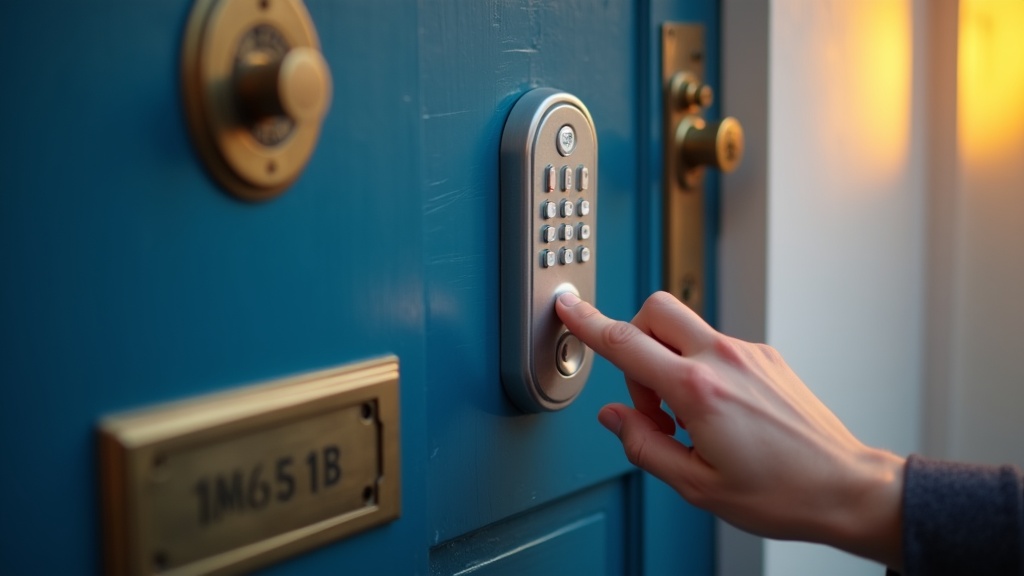
The affordable approach: buy a keypad deadbolt (brands like Yale Keyless, August, or even budget options from Screwfix at £60-90). Generate unique codes per booking via the companion app, send codes automatically in your pre-arrival message, and delete them after checkout.
ROI calculation: if you host 30 bookings per year and value your time at £15/hour, eliminating 30 minutes per check-in coordination saves £225 annually. A £90 smart lock pays for itself in under six months.
Pro tip: mention 'Self Check-in' and 'Keyless Entry' in your listing title and amenities. Both are heavily filtered by business travellers and boost your ranking in search results.
Cost: £60-120 one-time
7. Basic Task and Maintenance Automation
The challenge: remembering to order supplies, schedule cleaner visits, and complete routine maintenance checks manually leads to last-minute scrambles and guest complaints.
The free solution: use Google Calendar with recurring tasks. Set reminders for:
- Weekly: check cleaning inventory (toilet paper, coffee, bin bags)
- Monthly: test smoke alarms, check for maintenance issues
- Quarterly: deep-clean appliances, replace air fresheners, update seasonal décor
- Booking-based: schedule cleaner 1 day after each checkout (manually add after each booking confirmation)
The upgrade: tools like Trello (free) or Asana (free up to 15 users) let you create checklists for cleaners and maintenance teams. Share a board with your cleaner showing post-checkout tasks, and they tick items off after each visit.
Cost: £0
Which Airbnb Automation Tools Are Actually Worth Paying For?
Not all automation needs to be free. Some paid tools deliver ROI that justifies the cost — even for small hosts.
Worth paying for if you host 2+ properties:
- Dynamic pricing software (£15-25/property): if manual pricing adjustments feel overwhelming or you're in a high-competition market, tools like PriceLabs pay for themselves in 1-2 extra bookings per year
- Noise monitoring devices (£150-200 one-time, like Minut or NoiseAware): protect against party damage and neighbour complaints without cameras
- Professional listing audit (£9-50 one-time): expert analysis from LetGrow or similar platforms shows you blind spots you'd never spot yourself
NOT worth paying for if you're a small host:
- Enterprise channel managers (£40-100/month): overkill if you're only on Airbnb and one other platform
- Automated upsell platforms (£20-50/month): these push late checkout, early check-in, or breakfast add-ons — but small hosts can offer these manually via messages at no cost
- Full property management software (£30-80/property): combines messaging, pricing, and cleaning coordination — but you're paying for features you've already automated for free
The break-even rule: only pay for automation if it saves you 3+ hours monthly or generates at least one extra booking. Otherwise, stick with the free tools above.
How to Layer Affordable Airbnb Automation Without Overwhelming Yourself

The biggest mistake small hosts make is trying to automate everything at once. Here's how to phase it in over 30 days:
Week 1: Automate guest communication
Set up Airbnb's scheduled messages for booking confirmation, check-in instructions (2 days before arrival), and review request (2 days after checkout). Test by sending yourself a preview message. This alone saves 15-20 minutes per booking.
Week 2: Optimise your listing for search
Run your free LetGrow listing score and implement the top three recommendations (usually: fix title structure, add missing amenities, reorder photos). This typically lifts your search ranking within 1-2 weeks.
Week 3: Automate access and pricing
Install a smart lock and generate per-booking codes. Review your pricing against competitor rates using LetGrow's pricing analysis, then set weekend uplifts and seasonal rules. Automate the 'set it and forget it' parts; manual tweaks can wait.
Week 4: Set up maintenance and review tracking
Create a Google Calendar with recurring tasks for cleaning checks and maintenance. Set up a simple spreadsheet to log review scores. Spend 10 minutes weekly updating it.
By day 30, you've automated 70-80% of repetitive hosting tasks — without spending more than £100 total (mostly on the smart lock). The time saved compounds: instead of 10+ hours weekly on admin, you're down to 2-3 hours.
Common Mistakes Small Hosts Make with Airbnb Automation
Mistake 1: Over-automating guest communication
Sending 8+ automated messages makes you feel robotic. Guests notice when every message is a template. Automate the essentials (confirmation, check-in, review request) but keep mid-stay communication personal and responsive.
Mistake 2: Setting pricing automation and ignoring it
Even free tools like Airbnb Smart Pricing need quarterly reviews. Local events, new competitor listings, and seasonal trends shift faster than algorithms adapt. Check your calendar monthly and override automated rates when they look off.
Mistake 3: Trusting automation without testing
Send yourself test messages. Book a test stay (on a different account or via a friend). Generate a test smart lock code. Automation that breaks during a real guest stay destroys reviews faster than manual effort ever could.
Mistake 4: Automating before optimising
Automation amplifies what you're already doing. If your listing title is weak, your photos are poorly ordered, or your pricing is 20% below market, automation won't fix those problems — it'll just deliver mediocre results faster. Fix your listing fundamentals first, then automate the operations.
When DIY Automation Isn't Enough: Knowing Your Limits
Budget automation works brilliantly for hosts managing 1-3 properties who enjoy the operational side of hosting. But there are scenarios where spending more (or outsourcing) makes sense:
- You're managing 4+ properties: at this scale, paid channel management and professional cleaning coordination tools pay for themselves in time saved
- You're earning £30,000+ annually per property: your time becomes more valuable than the cost of premium tools — invest in automation that maximises revenue, not just minimises cost
- You hate the admin work: if hosting operations drain your energy, a management company might cost less than the mental toll of DIY
- Your occupancy is below 60%: automation won't fix poor listing performance — you need optimisation first, then operational efficiency
If you're unsure whether your listing is ready for automation or needs optimisation first, get your free performance score from LetGrow. It shows you whether you're losing bookings to weak search ranking, poor pricing, or operational issues.
Frequently Asked Questions
Can I automate my Airbnb hosting completely for free?
Yes, for core tasks. Airbnb's native scheduled messages, Smart Pricing baseline, iCal calendar sync, and Google Calendar task reminders cover guest communication, basic pricing, multi-platform availability, and maintenance tracking at zero cost. The only essential paid item is a smart lock (£60-120 one-time) for self check-in, which pays for itself in time saved within six months.
What's the single most valuable automation tool for small UK hosts?
Automated guest messaging via Airbnb's scheduled messages. It saves 15-20 minutes per booking, eliminates forgotten check-in instructions, and ensures every guest receives review requests. Because it's free and built into your dashboard, there's no technical setup barrier — just create templates and set triggers.
Do I need expensive dynamic pricing software to compete with professional hosts?
Not necessarily. Professional hosts use dynamic pricing to capture 10-15% more revenue, but you can close most of that gap manually by setting weekend uplifts (15-25% higher than weeknights), seasonal rates (20-30% higher in peak months), and length-of-stay discounts (10% for 7+ nights). Review your pricing quarterly using free competitor research tools like LetGrow's pricing analysis to stay competitive.
How much time does affordable automation actually save?
Expect to cut hosting admin from 10-12 hours weekly to 2-3 hours once you've automated messaging, check-in, and pricing adjustments. The biggest time savings come from eliminating repetitive tasks (sending the same messages, coordinating key handoffs, manually updating rates) rather than complex operational work.
What's the difference between automation tools and listing optimisation platforms?
Automation tools handle repetitive operational tasks (messaging, pricing updates, calendar syncing) to save you time. Optimisation platforms like LetGrow analyse your listing's performance against competitors and show you how to improve your search ranking, conversion rate, and revenue through better titles, photos, and pricing strategy. Most small hosts need optimisation first — automation just makes poor-performing listings more efficiently mediocre.
Are smart locks worth the upfront cost for a single Airbnb property?
Absolutely. A £90 keypad lock eliminates 30+ minutes of coordination per booking (arranging key handoffs, lockbox access, or meeting guests). Over 30 bookings annually, that's 15 hours saved. Even valuing your time at £10/hour, you've saved £150 — paying for the lock and generating £60 profit. Plus, self check-in is a heavily searched amenity that boosts your ranking and appeals to business travellers.
Start Small, Automate Smart, and Scale When Ready
You don't need a tech stack that rivals enterprise operators to run a profitable, efficient Airbnb. The tools above — most of them free or under £10 monthly — deliver 80% of the results for 5% of the cost.
The smartest small hosts automate operations, but optimise performance first. A listing with weak photos, poor search ranking, and uncompetitive pricing won't suddenly succeed because you've automated the checkout message. Fix the revenue leaks, then automate the operations.
Ready to see how your listing measures up? Get your free performance score at LetGrow and discover exactly what's holding your bookings back — before you automate another thing.