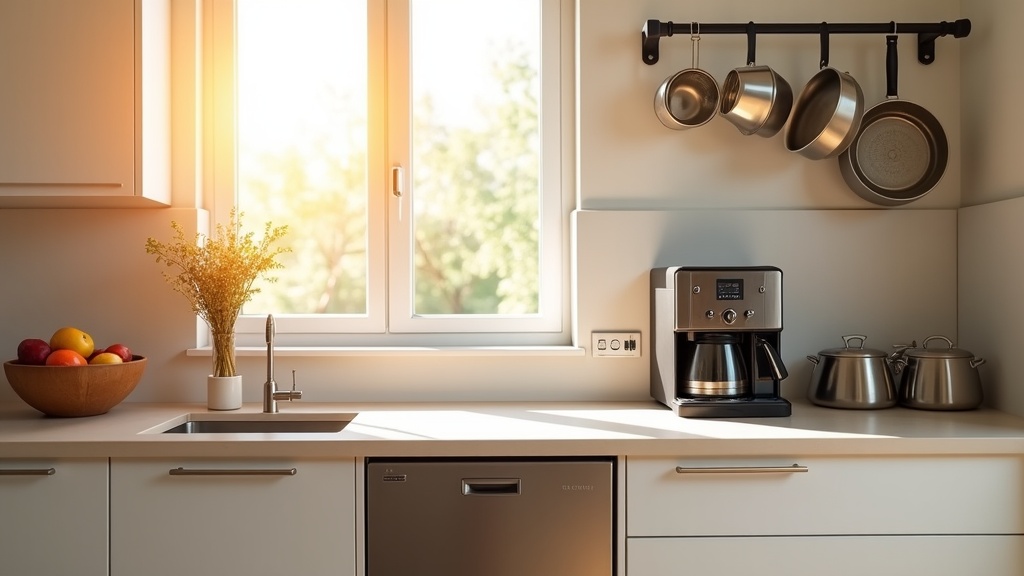
Why Most Airbnb Hosts Leave Money on the Table With Their Kitchen
Your kitchen is sitting on £20–40 extra per night in booking value, and most UK hosts have no idea. While you're competing on price with identical listings down the road, guests are quietly filtering search results by premium kitchen amenities you don't have. The right kitchen equipment doesn't just improve guest experience — it fundamentally shifts which searches your listing appears in, and which guests are willing to pay more.
This isn't about buying every gadget on Amazon. It's about understanding which specific Airbnb kitchen amenities trigger the platform's search filters, which items guests actually notice in reviews, and which upgrades deliver measurable ROI through higher nightly rates and better occupancy. The hosts charging £150/night for the same property type you're listing at £95? They've cracked this formula.
If you're serious about optimising your Airbnb listing for premium pricing, your kitchen is the single highest-leverage room to invest in. Here's exactly what to buy, why it matters, and how to position it.
The Search Filter Problem: Kitchen Amenities Guests Actually Tick
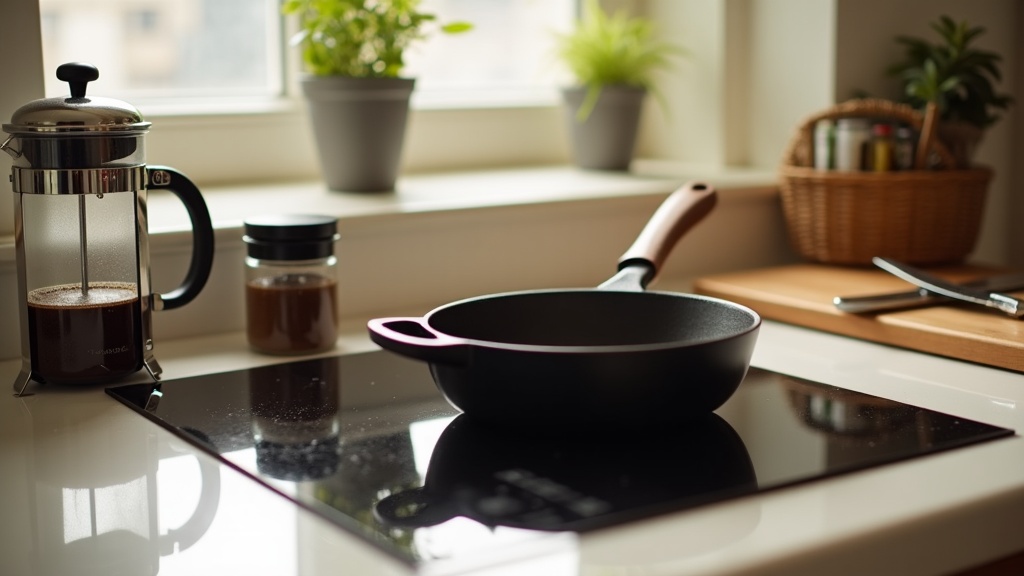
Airbnb's search filters control visibility more than your star rating. When a guest searches for a property in your area and ticks 'dishwasher' or 'coffee maker', your listing either appears or it doesn't. No amount of beautiful photos or glowing reviews will save you if you're filtered out before they ever see your listing.
The most valuable kitchen filters for UK hosts are:
- Dishwasher — Ticked by 40%+ of guests searching for 2+ bedroom properties or stays longer than 3 nights
- Coffee maker — Increasingly common filter for couples and business travellers (and a £15 cafetière counts — more on this shortly)
- Cooking basics — Oil, salt, pepper, spices. Not a search filter, but mentioned in 1 in 5 five-star reviews
- Dishes and silverware — Baseline expectation, but surprisingly often missing or incomplete
Missing any of these? You're invisible to a segment of high-value guests. The ROI on a £250 slimline dishwasher isn't measured in convenience — it's measured in the 40% of searches you're suddenly appearing in.
The Coffee Maker Loophole Every Host Should Know
Here's something almost nobody tells you: a £10 cafetière qualifies as a 'Coffee Maker' on Airbnb's amenity checklist. You don't need a £150 bean-to-cup machine. A basic French press or stovetop moka pot lets you tick the 'Coffee Maker' box and appear in filtered searches.
For business travellers and weekend breakers — two of the highest-paying guest segments — this single amenity is a deal-breaker. Add a small jar of decent ground coffee (replace it every few bookings), and you've just unlocked a new tier of visibility for under £20.
Premium Kitchen Equipment That Justifies Higher Nightly Rates
Once you've covered the search filter essentials, the next tier is about justifying premium pricing. These are the items guests mention in reviews, photograph for their Instagram stories, and remember when they're choosing between your listing and three others at similar price points.
1. High-Quality Cookware and Knives (Not IKEA Basics)
Budget hosts buy the cheapest pan set from Argos and wonder why guests complain about cooking. Premium hosts invest £80–120 in a decent non-stick frying pan, a cast-iron skillet, and two sharp knives. Why? Because guests notice.
Check any five-star review for a premium listing — you'll see phrases like 'well-equipped kitchen', 'everything we needed to cook', 'better than my own kitchen'. These aren't about having 47 utensils. They're about having the right tools that actually work.
Specific recommendations:
- One excellent non-stick frying pan (ProCook or similar, £30–40) — replaces three cheap ones that stick and scratch
- One cast-iron skillet or griddle pan (£25–35) — guests planning to cook proper meals notice this
- Two sharp knives (a chef's knife and a serrated bread knife, £40 total) — blunt knives generate more complaints than missing wine glasses
- A wooden chopping board (£15) — not the flimsy plastic one that slides around
This isn't about turning your rental into a professional kitchen. It's about crossing the threshold from 'barely functional' to 'actually pleasant to use'. That threshold is where guests stop mentally downgrading your listing and start thinking 'this place is worth what they're charging'.
2. Small Appliances That Unlock New Guest Segments
Certain kitchen gadgets aren't just nice-to-haves — they open your listing to entirely different guest profiles who are willing to pay more.
Microwave — Non-negotiable for families and longer stays. If you're targeting anyone staying more than 3 nights or travelling with kids, a microwave (£50–70) is baseline. Without it, you're filtered out by 60%+ of family searches.
Toaster — Seems obvious, but you'd be surprised. A £20 two-slice toaster appears in more five-star reviews than you'd think. 'Couldn't even make toast for breakfast' is a review killer.
Kettle — This is the UK. You already have one. If you don't, stop reading and buy one immediately.
Blender or smoothie maker (£25–40) — Niche, but powerful for health-conscious travellers and longer stays. If your listing targets professionals or fitness-minded guests, this is a quiet differentiator.
Slow cooker or air fryer (£40–60) — Surprisingly effective for longer-stay guests (5+ nights) who want to cook proper meals but don't want to spend their holiday monitoring the hob. Mention it in your listing description and watch how often it appears in reviews.
3. The Pantry Staples That Turn Good Reviews Into Great Ones
This is where good hosts become great hosts. Cooking basics — olive oil, salt, pepper, a few spices, tea, coffee, sugar — cost £20 to stock and last months. They're mentioned in a disproportionate number of glowing reviews.
Why? Because guests don't expect them. When they arrive and find a small selection of basics, it feels like hospitality, not a transaction. That emotional shift is what turns a four-star review into five stars, and a one-time guest into a repeat booking.
What to stock:
- Olive oil and vegetable oil
- Salt, black pepper, mixed herbs
- Tea bags (standard breakfast tea + one herbal option)
- Instant coffee or ground coffee (if you have a cafetière or machine)
- Sugar and long-life milk or oat milk
- Tomato ketchup, mayo, and mustard (optional, but appreciated)
Store them in a small basket or shelf with a label: 'Welcome! Please help yourself to these basics.' It's a £20 investment that pays for itself in review quality and repeat bookings.
Want to see how these small touches stack up against your competitors? LetGrow's free listing score analyses your amenities, photos, and pricing to show you exactly where you stand — and what's quietly costing you bookings.
How to Calculate ROI on Kitchen Upgrades
Every pound you spend on kitchen equipment should return at least £5–10 in additional booking revenue over 12 months. Here's how to think about ROI:
Scenario 1: Adding a Dishwasher to a 2-Bedroom Flat
Cost: £250 (slimline dishwasher) + £50 installation = £300 total
Impact: Listing now appears in filtered searches for 40% more potential guests (families, longer stays, groups)
Pricing uplift: Justified increase of £8–12/night for family-friendly properties with full kitchen amenities
Occupancy boost: Estimated +5–8% from appearing in more searches
Payback period: 30–40 nights (roughly 3–5 months for a well-occupied listing)
Scenario 2: Upgrading Cookware and Adding Coffee Maker
Cost: £120 (quality pans, knives, chopping board, cafetière)
Impact: Listing now ticks 'Coffee Maker' filter + improved review mentions of kitchen quality
Pricing uplift: Justified increase of £3–5/night
Occupancy boost: Estimated +2–3% from better reviews and coffee filter visibility
Payback period: 25–35 nights (roughly 2–4 months)
Scenario 3: Stocking Pantry Basics
Cost: £20 initial stock, £5/month to replenish
Impact: No direct pricing uplift, but measurably better reviews and repeat booking rate
Payback period: Impossible to calculate precisely, but premium hosts report 15–20% higher repeat guest rates when small hospitality touches are present
The key insight: Kitchen upgrades aren't expenses — they're investments in search visibility, pricing power, and review quality. If you're not tracking which amenities drive bookings, you're flying blind. Understanding what guests actually want is the difference between guessing and growing revenue strategically.
How to Photograph Your Kitchen for Maximum Impact
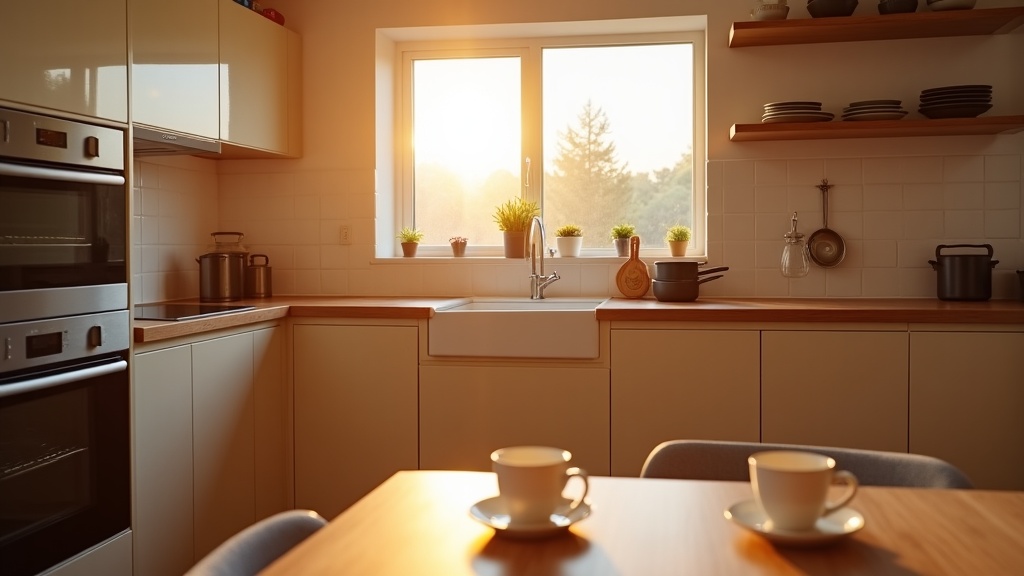
You've invested in premium kitchen equipment. Now you need to make sure guests see it. Your kitchen photo should appear in positions 3–6 of your listing gallery — early enough to influence first impressions, but after your hero living space and bedroom shots.
What to include in your kitchen photo:
- Clear view of worktop space — Guests subconsciously assess whether there's room to prep food
- Visible premium appliances — If you have a dishwasher, coffee machine, or high-end cooker, make sure it's in frame
- Styled but not staged — A fruit bowl, fresh flowers, or neatly folded tea towel adds warmth without looking fake
- Good lighting — Natural light or warm LED. Harsh overhead fluorescent lighting makes even luxury kitchens look cheap
Avoid common mistakes: cluttered worktops, visible bins, harsh shadows, or wide-angle distortion that makes the space look odd. For detailed guidance on kitchen photography, read our guide on setting up your kitchen for maximum visual impact.
Listing Your Kitchen Amenities: What to Tick (and What Not to Claim)
This sounds obvious, but it's where many hosts go wrong. Only tick amenities you actually have. Airbnb's algorithm cross-references your ticked amenities with guest reviews and photos. If you claim to have a dishwasher and guests complain about washing up by hand, your listing gets dinged.
Common mistakes:
- Claiming 'Coffee maker' when you only provide instant coffee — Guests expect something that brews coffee. A jar of Nescafé doesn't count. A cafetière does.
- Ticking 'Cooking basics' when you don't provide oil, salt, or pepper — If guests have to buy these on arrival, you don't have cooking basics.
- Listing 'Dishes and silverware' but only providing two plates and three forks — You need enough for your maximum guest count, plus spares.
On the flip side, don't undersell what you have. If you've added a dishwasher, make sure it's ticked in your amenities and mentioned in your listing description and visible in your kitchen photo. Visibility drives bookings — if guests don't know you have it, it doesn't exist.
The Amenities That Justify Premium Pricing (Beyond the Kitchen)
Kitchen equipment is foundational, but if you're serious about premium pricing, you need to think holistically. The listings charging 30–50% more than comparable properties aren't doing it with a nice frying pan alone.
They're stacking value:
- Kitchen essentials (covered above)
- Fast Wi-Fi (50+ Mbps, tested and mentioned in the listing)
- Smart TV with Netflix/streaming (mentioned in 80%+ of premium listings)
- Private parking (worth £10–15/night in cities, more in London)
- Washer/dryer (essential for stays longer than 5 nights)
- Workspace (desk, chair, good lighting — non-negotiable for business travellers)
Each amenity unlocks a new segment of guests willing to pay more. The compounding effect is what separates budget listings from premium ones. For a full breakdown of which amenities deliver the highest ROI, read our guide on amenities that justify premium pricing in the UK.
Common Mistakes Hosts Make With Kitchen Amenities
Even experienced hosts fall into these traps. Here's what to avoid:
Mistake 1: Buying Cheap and Replacing Constantly
A £12 non-stick pan from Wilko will last three months and generate complaints. A £35 pan from ProCook will last three years and appear in positive reviews. Quality kitchen equipment isn't an expense — it's a cost-saving strategy.
Mistake 2: Over-Cluttering the Kitchen
You don't need 14 types of glass, three whisks, and a bread maker. Guests want functional simplicity: the right tools, easy to find, easy to use. Cluttered cupboards and drawers frustrate guests and generate 'disorganised' reviews.
Mistake 3: Not Mentioning Kitchen Amenities in the Description
You can tick every box in the amenities checklist, but if guests don't read about your premium kitchen in your description, they won't value it. One sentence is enough: 'The fully equipped kitchen includes a dishwasher, Nespresso machine, quality cookware, and all the essentials to cook at home.'
That single line shifts perception and justifies higher pricing.
Mistake 4: Ignoring Guest Feedback About the Kitchen
If two guests in a row mention 'would have been nice to have a toaster' or 'no sharp knives', that's not bad luck — that's data. Your reviews are a free audit of what's missing. Act on them.
How to Price Your Listing After Adding Premium Kitchen Amenities
You've invested £300–500 in kitchen upgrades. Now what? You can't just add £10/night and hope guests don't notice. Pricing strategy requires understanding your local market, competitor positioning, and guest expectations.
Here's the process:
- Audit your competitors — Find 5–7 similar listings in your area (same property type, guest count, location). Which amenities do they have? What are they charging?
- Identify your new positioning — If you now have amenities that 60% of competitors don't (e.g. dishwasher, coffee maker, quality cookware), you're justified in pricing above the median.
- Test incremental increases — Add £5/night for two weeks. Monitor enquiry rate and booking conversion. If both hold steady or improve, add another £3–5. If bookings drop, roll back and reassess.
- Adjust for demand patterns — Premium amenities justify higher pricing during peak periods (weekends, local events, school holidays). Use dynamic pricing to capture this.
Not sure where you sit in your local market? Compare your pricing strategy with LetGrow's competitor analysis to see exactly how your amenities and rates stack up against nearby listings.
Premium Pricing During Peak Demand: Kitchen Amenities and Event Strategy
Here's where premium kitchen amenities really pay off. When local demand spikes — festivals, conferences, sporting events — guests with families or longer stays prioritise self-catering properties. A listing with a full kitchen can charge 20–40% more than a hotel-style room during these periods.
Why? Because a family of four staying for a festival weekend will pay a premium to avoid eating out for every meal. Your dishwasher, coffee maker, and well-stocked pantry aren't just nice touches — they're cost-saving tools for guests, which justifies premium pricing on your end.
If you're in a city with regular events (Edinburgh Festival, Wimbledon, Glastonbury, university graduations), your kitchen amenities directly increase your pricing power during those windows. For detailed strategies on event-based pricing, read our guide on premium rates during festival and event season.
Conclusion: Kitchen Amenities Are Pricing Power
Your kitchen isn't just a room — it's a revenue lever. The right equipment shifts your listing from commodity to premium, unlocks new guest segments, and justifies higher nightly rates. A £300–500 investment in kitchen amenities typically pays for itself in 3–5 months through better occupancy, higher rates, and stronger reviews.
The hosts charging £150/night while you're stuck at £95? They're not in a better location or offering a bigger property. They've simply optimised the details that matter — and the kitchen is where it starts.
Ready to see how your listing measures up? Get your free Airbnb performance score from LetGrow and discover exactly what's holding your pricing back — and what to fix first.
Frequently Asked Questions
What kitchen amenities add the most value to an Airbnb listing?
The highest-ROI kitchen amenities are a dishwasher (unlocks 40% more searches for families and longer stays), a coffee maker (even a £10 cafetière counts on Airbnb's filters), quality cookware and sharp knives (mentioned in premium reviews), and cooking basics like oil, salt, and pepper (disproportionately improve guest satisfaction). These items justify £8–15 extra per night and typically pay for themselves in 3–5 months.
Does a cafetière count as a coffee maker on Airbnb?
Yes. A French press, cafetière, stovetop moka pot, or any device that brews coffee qualifies for Airbnb's 'Coffee Maker' amenity filter. You don't need an expensive machine — a £10 cafetière and a jar of ground coffee unlocks the same search visibility as a £150 bean-to-cup machine. This is one of the highest-value, lowest-cost upgrades you can make.
How much can I increase my nightly rate after adding premium kitchen equipment?
It depends on your local market and competitor positioning, but most UK hosts can justify £5–12/night after adding a dishwasher, coffee maker, and quality cookware. The increase comes from appearing in more filtered searches (occupancy boost) and justifying higher pricing to guests who value self-catering amenities. Test incremental increases of £5/night and monitor booking conversion — if it holds steady, you've priced correctly.
What's the ROI on adding a dishwasher to an Airbnb?
A slimline dishwasher costs £250–350 installed and typically pays for itself in 30–40 nights (3–5 months for a well-occupied listing). The ROI comes from appearing in 40% more searches (families and longer stays filter by dishwasher) and justifying £8–12/night higher pricing for family-friendly properties. It's one of the highest-impact kitchen upgrades for 2+ bedroom listings.
Should I stock pantry basics like oil and salt in my Airbnb kitchen?
Absolutely. Cooking basics (olive oil, salt, pepper, spices, tea, coffee) cost £20 to stock and last months, but they're mentioned in a disproportionate number of five-star reviews. Guests don't expect them, so when they're provided, it feels like genuine hospitality rather than a transaction. This emotional shift improves review quality and repeat booking rates — both of which increase long-term revenue.
How do I photograph my Airbnb kitchen to show off premium amenities?
Your kitchen photo should appear in positions 3–6 of your gallery, with natural or warm lighting, visible premium appliances (dishwasher, coffee machine, quality cooker), clean worktops, and a small styled touch like a fruit bowl or fresh flowers. Avoid clutter, harsh lighting, and wide-angle distortion. The goal is to show both functionality and warmth — guests should be able to visualise themselves cooking there.