Why Most First-Time Airbnb Hosts Get This Wrong
You've prepped the guest bedroom, styled the photos, and written a welcoming description. But before you hit 'publish' on your first Airbnb listing, there's a minefield of legal requirements most first-time hosts completely overlook — and it can cost you thousands in fines, invalidate your insurance, or even shut down your listing overnight.
The good news? With the right Airbnb legal checklist, staying compliant is entirely manageable. This guide walks you through every legal obligation UK hosts need to tick off before welcoming your first guest, from planning permission and tax registration to fire safety and guest screening. Whether you're renting out a spare room or an entire property, here's exactly what you need to know.
Do I Need Planning Permission to Run an Airbnb in the UK?
In England and Wales, you don't usually need planning permission to let out your main home occasionally, but you do if you're running a separate property as a full-time short-term let. The moment your property becomes a business rather than a home, it may require 'change of use' approval from your local council.
Here's how to know where you stand:
- Renting your main residence occasionally: Generally fine without permission, as long as the property remains your primary home and you're not running a commercial operation.
- Renting a second property or buy-to-let: If you're letting short-term (under 90 nights per booking), many councils consider this a change from residential (C3) to commercial (C1) use, which requires planning permission.
- London hosts: The 90-day rule applies across the capital — you can let your main home for up to 90 nights per calendar year without permission. Beyond that, you'll need approval. Learn more about London-specific Airbnb regulations including short-term let registration and council enforcement.
Action step: Check your local council's planning portal or call their planning department. Some councils (like Edinburgh) have introduced stricter licensing schemes, while others remain more relaxed. Don't assume — verify.
The Airbnb Legal Requirements Nobody Tells You About: Mortgage, Lease & Freeholder Consent

This is the silent listing killer. Even if planning law is on your side, your mortgage lender, landlord, or freeholder might have written Airbnb hosting out of your contract entirely.
Mortgage lenders: Most residential mortgages prohibit short-term letting without written consent. If you're hosting without telling your lender, you're breaching your mortgage terms — and they can demand immediate repayment of the loan.
Leaseholders and tenants: If you're renting or own a leasehold flat, check your lease or tenancy agreement. Many contain clauses banning subletting or commercial activity. Even a single Airbnb booking could put you in breach.
Freeholders and management companies: If you live in a block of flats, your freeholder or residents' association may prohibit short-term lets to protect other residents from noise and security concerns. Understand your legal liability around noise complaints before you list.
Action step: Contact your mortgage provider in writing, review your lease with a solicitor if needed, and get explicit written permission before you go live. A five-minute phone call now can save you a five-figure legal mess later.
Airbnb Hosting Legal Obligations: Registering with HMRC
All UK Airbnb income must be declared to HMRC, even if you're renting out a spare room in your main home. The tax rules vary depending on how much you earn and what type of property you're letting.
Rent a Room Scheme
If you're letting a furnished room in your main home, you can earn up to £7,500 per tax year tax-free under the Rent a Room Scheme. Anything above that threshold is taxable, and you'll need to register for Self Assessment if you're not already filing a tax return.
Letting a Separate Property or Entire Home
Income from letting an entire property (even if it's your main home while you're away) doesn't qualify for Rent a Room relief. You'll pay Income Tax on your profits after allowable expenses like cleaning, utilities, and maintenance. You may also need to charge VAT if your turnover exceeds £90,000.
Council Tax and Business Rates
If your property is let short-term year-round and is nobody's main residence, your council may reclassify it for business rates instead of council tax. In London, this is particularly common. Read our full guide to council tax and business rates for London Airbnb hosts.
Action step: Register for Self Assessment with HMRC if you're not already registered, keep detailed records of income and expenses, and consider speaking to an accountant experienced in short-term rental taxation.
Fire Safety Regulations Every Airbnb Host Must Follow
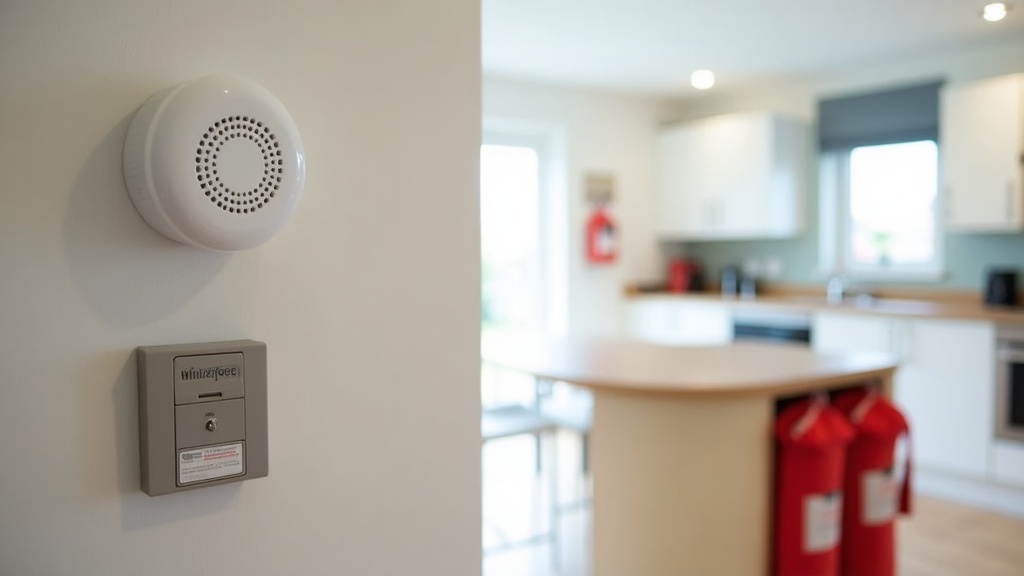
Fire safety is non-negotiable, and the legal requirements depend on whether you're renting a room in your home or an entire self-contained property.
Minimum Legal Requirements
- Smoke alarms: At least one on every floor where there's a room used as living accommodation. Test them before every check-in.
- Carbon monoxide alarms: Required in any room with a solid fuel burning appliance (e.g. wood burner, coal fire). Recommended in any room with gas appliances.
- Fire blanket: Strongly recommended in the kitchen, especially for self-catering properties.
- Clear escape routes: Ensure hallways, stairs, and exits are never blocked. Provide a visible fire escape plan if the property layout is complex.
Licensing Schemes and HMO Rules
If you're letting individual rooms to multiple guests who don't form a single household, your property may be classed as a House in Multiple Occupation (HMO), which triggers stricter fire safety rules including interlinked alarms, fire doors, and emergency lighting.
Action step: Install compliant smoke and CO alarms, test them monthly, and document your compliance. If you're in a high-rise or HMO, consult a fire risk assessor.
Do I Need a Licence to Run an Airbnb?
It depends entirely on where you live. England has no national licensing scheme for short-term lets (yet), but several councils have introduced their own, and Scotland and Wales have stricter rules.
England
Most English councils don't require a licence for occasional short-term letting, but a growing number of authorities — particularly in tourist hotspots like Brighton, Bristol, and Cornwall — are consulting on or introducing registration and licensing schemes. Always check your local council's website.
London
As of 2025, London introduced a mandatory short-term let registration scheme. Hosts must register their property with the council and display their registration number on listings. Fines for non-compliance can reach £5,000.
Scotland
Scotland requires all short-term let hosts to apply for a licence from their local council. The licensing regime includes safety inspections, planning checks, and ongoing compliance obligations.
Wales
Wales introduced a statutory registration and licensing scheme in 2023. All hosts must register with the local authority and, in some cases, obtain a licence.
Action step: Visit your council's website or call their licensing team to confirm whether you need a licence or registration. Don't wait until you're reported — get ahead of it.
Airbnb Guest Screening and Legal Obligations Under UK Law
You're not legally required to screen guests in the same way a landlord screens long-term tenants, but you do have a legal duty to prevent illegal activity on your property.
Under the Immigration Act 2014, landlords letting properties for 90 days or more must check a tenant's right to rent in the UK. While short-term lets under 90 days are exempt, if a guest overstays or you suspect illegal subletting, you could still face scrutiny.
You also have a responsibility to ensure guests don't use your property for illegal purposes (e.g. drug production, brothels, or hosting unlicensed events). Read our full guide to Airbnb guest screening and your legal responsibilities.
Action step: Use Airbnb's verification tools, require government ID, and set clear house rules. If a guest raises red flags, trust your instinct and decline the booking.
Do I Need Specialist Airbnb Host Insurance?
Yes. Standard home insurance almost never covers short-term letting, and hosting without the right cover can leave you personally liable for tens of thousands in damages or injury claims.
Airbnb's Host Guarantee and Host Protection Insurance offer some coverage, but they're not a substitute for proper insurance. You need:
- Public liability insurance: Covers you if a guest is injured on your property.
- Buildings and contents insurance: Must explicitly cover short-term letting and guest damage.
- Loss of earnings cover: Protects your income if the property becomes uninhabitable due to fire, flood, or other insured events.
Our 2026 guide to Airbnb host insurance breaks down exactly what you need and which UK providers specialise in short-term rental cover.
Action step: Call your current insurer and ask if your policy covers short-term letting. If not, switch to a specialist provider before your first booking.
Creating Your Airbnb Legal Checklist: What to Do Before You Go Live
Here's your step-by-step compliance checklist for first-time Airbnb hosts in the UK:
- Check planning permission requirements with your local council.
- Get written consent from your mortgage lender, landlord, or freeholder.
- Register for Self Assessment with HMRC if you're not already filing a tax return.
- Install smoke alarms and carbon monoxide detectors on every floor and test them.
- Apply for any required licences or registration (London, Scotland, Wales, or council-specific schemes).
- Switch to specialist short-term rental insurance covering public liability, contents, and loss of earnings.
- Set up a guest screening process and write clear house rules to protect yourself legally.
- Keep detailed records of income, expenses, safety checks, and guest communications.
Once you've ticked off every item, you're ready to list with confidence — knowing you're compliant, protected, and set up for long-term success.
If you'd like an expert assessment of your listing once it's live, LetGrow's free Airbnb listing score analyses your title, photos, pricing, and amenities to show you exactly where you can improve performance and maximise bookings.
How to Stay Compliant as Regulations Change
UK short-term rental regulation is evolving fast, and what's compliant today might not be in six months. Here's how to stay ahead:
- Subscribe to your council's planning and licensing updates. Many local authorities now send email alerts when new schemes are introduced.
- Join Airbnb host communities and forums. Other hosts in your area will often spot regulatory changes before official channels announce them.
- Review your insurance annually. Policy exclusions and coverage limits change, so don't assume last year's policy still protects you.
- Keep an eye on national government consultations. England is moving toward a national registration scheme, and getting ahead of it will give you a competitive advantage.
Want a professional second opinion on your listing setup? LetGrow helps UK Airbnb hosts optimise every element of their listing — from SEO and pricing strategy to compliance and competitor analysis.
Common Legal Mistakes First-Time Airbnb Hosts Make
Even experienced hosts trip up on these compliance blind spots. Here's what to avoid:
Assuming Airbnb's Terms Cover You Legally
Airbnb's Host Guarantee and Host Protection are helpful, but they don't replace your legal obligations around planning, tax, insurance, or safety. You're responsible for compliance, not Airbnb.
Ignoring Lease or Mortgage Clauses
Hoping your lender or landlord won't notice is not a strategy. Neighbours report hosts, councils investigate, and breaches can trigger immediate eviction or loan recalls.
Failing to Declare Income Because 'It's Just a Spare Room'
HMRC is increasingly data-sharing with platforms like Airbnb. Even small amounts of undeclared income can trigger penalties and interest if you're caught in an audit.
Listing Without Smoke Alarms or Insurance
A single fire or injury claim can bankrupt you if you're uninsured. Don't cut corners on safety — it's the law, and it protects your livelihood.
For a full compliance review tailored to your property, get your free Airbnb performance score from LetGrow and see exactly where your listing stands.
What Happens If You Don't Follow the Airbnb Legal Checklist?
The consequences of non-compliance range from financial penalties to criminal prosecution, depending on the breach.
- Planning breaches: Councils can issue enforcement notices, fines up to £20,000, and require you to cease trading immediately.
- Tax evasion: HMRC can charge penalties of up to 100% of the unpaid tax, plus interest and potential prosecution for serious cases.
- Unlicensed operation: In areas with mandatory licensing (London, Scotland, Wales), fines can reach £5,000 or more, and Airbnb may delist your property.
- Insurance breaches: If you're hosting without proper cover and a guest is injured or your property is damaged, you're personally liable — potentially for six-figure sums.
- Mortgage or lease breaches: Lenders can recall your loan in full, and landlords can evict you for breach of tenancy.
The risk isn't worth it. A few hours of compliance work now can save you years of legal and financial headaches.
Your Airbnb Legal Checklist: Final Takeaways
Starting an Airbnb in the UK is entirely achievable for first-time hosts — as long as you respect the legal framework. The hosts who thrive are the ones who treat compliance as part of their business setup, not an afterthought.
Remember: planning permission, lender consent, HMRC registration, fire safety, licensing, insurance, and guest screening aren't optional extras. They're the foundation of a sustainable, profitable hosting business.
Tick off every item on this checklist before you publish your listing, keep records of everything, and stay alert to regulatory changes in your area. You'll sleep better, host with confidence, and build a reputation as a trusted, professional operator.
For more guidance on navigating UK Airbnb regulations, check out our complete guide to UK Airbnb regulations in 2026.
Ready to see how your listing measures up? Get your free Airbnb performance score at LetGrow and discover exactly where to optimise for more bookings and better revenue.
Frequently Asked Questions
Do I need planning permission to run an Airbnb in my own home in the UK?
Generally, you don't need planning permission to let out your main home occasionally in England and Wales, as long as it remains your primary residence. However, if you're letting a second property or running a full-time short-term let, you may need 'change of use' approval from your local council. In London, the 90-day rule applies — you can let your main home for up to 90 nights per year without permission.
Do I have to tell my mortgage lender if I start an Airbnb?
Yes. Most residential mortgages prohibit short-term letting without written consent from the lender. Hosting without telling your mortgage provider is a breach of your mortgage terms, and they can demand immediate repayment of the loan. Always get written permission before you list your property.
Is Airbnb income taxable in the UK?
Yes, all Airbnb income must be declared to HMRC. If you're renting a room in your main home, you can earn up to £7,500 per year tax-free under the Rent a Room Scheme. Any income above that, or income from letting a separate property, is taxable. You'll need to register for Self Assessment if you're not already filing a tax return.
What insurance do I need to host on Airbnb in the UK?
You need specialist short-term rental insurance covering public liability, buildings and contents (with guest damage cover), and ideally loss of earnings. Standard home insurance almost never covers Airbnb hosting. Airbnb's Host Guarantee and Host Protection offer some coverage, but they're not a substitute for proper insurance.
Do I need a licence to run an Airbnb in England?
It depends on your local council. England has no national licensing scheme yet, but London introduced mandatory registration in 2025, and other councils (especially tourist areas) are introducing their own schemes. Scotland and Wales both require licences or registration for all short-term lets. Always check with your local authority.
What fire safety equipment is legally required in an Airbnb?
You must install at least one smoke alarm on every floor where there's a room used as living accommodation, and a carbon monoxide alarm in any room with a solid fuel burning appliance. Both must be tested regularly. If your property is an HMO (House in Multiple Occupation), stricter rules apply, including interlinked alarms and fire doors.