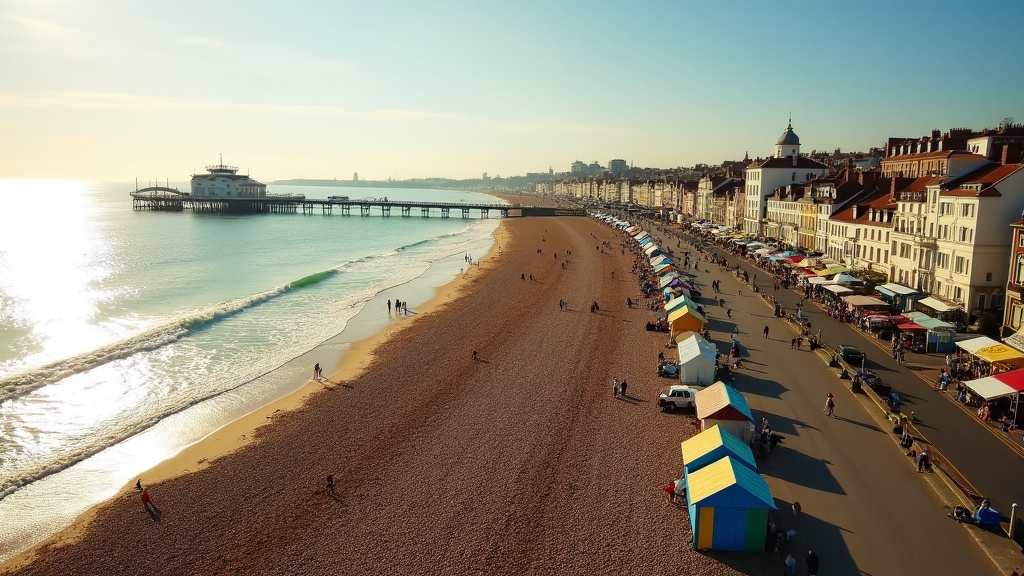
Brighton's Airbnb market presents unique opportunities for hosts willing to understand their competitive landscape. With seafront properties commanding premium rates whilst budget-friendly options cater to stag weekends and festival-goers, mastering Airbnb pricing Brighton market dynamics requires a data-driven approach to competitor analysis and strategic positioning.
What Makes Brighton's Airbnb Market Unique?
Brighton's short-term rental market operates differently from typical UK cities due to its dual identity as a business hub and seaside resort. The city attracts diverse guest segments throughout the year, from weekend leisure travellers to corporate visitors attending conferences at Brighton Centre.
The market splits into distinct pricing tiers. Seafront properties with sea views command £150-300+ per night during peak summer months, whilst inland Victorian terraces and modern flats typically range from £60-120 per night. Properties near Brighton Station benefit from business traveller demand, whilst those in The Lanes attract tourists seeking authentic Brighton character.
Seasonal fluctuations are more pronounced than London markets. Summer weekends see rates surge 40-60% above midweek prices, whilst winter months require competitive pricing to maintain occupancy. Festival periods—Brighton Festival in May, Pride in August, and various music events—create revenue spikes for well-positioned hosts.
University of Brighton and University of Sussex graduation periods generate concentrated demand in July, often overlooked by hosts focused solely on tourist seasons. Corporate demand peaks Tuesday-Thursday, creating opportunities for midweek revenue optimisation.
How Do Brighton Airbnb Rates Compare Across Property Types?

Brighton Airbnb rates vary significantly based on location, property type, and amenities, with seafront locations commanding the highest premiums year-round.
**Seafront Properties (Hove Seafront to Brighton Marina)**
These premium locations consistently achieve the highest rates. One-bedroom seafront flats average £120-180 per night off-season, rising to £200-350 during summer weekends. Properties with private balconies or sea-view windows can command 20-30% premiums over similar inland properties.
**City Centre & Lanes Area**
Properties within walking distance of Brighton Pier and The Lanes typically achieve £80-150 per night for one-bedroom units. Character properties in converted Victorian buildings often outperform modern developments due to Instagram appeal and authentic Brighton atmosphere.
**Kemptown & Hanover**
These trendy neighbourhoods offer strong value positioning at £70-120 per night. Properties emphasising local cafes, vintage shops, and artistic community appeal attract younger demographics willing to walk 10-15 minutes to seafront attractions.
**Preston Park & Seven Dials**
Residential areas popular with business travellers and longer stays typically price at £60-100 per night. Proximity to Brighton Station adds significant value for corporate guests.
Analysis of comparable properties reveals that hosts who regularly adjust pricing based on local events and competitor movements achieve 15-25% higher revenue than those using static pricing strategies.
Which Areas Command the Highest Brighton Holiday Rental Rates?
Hove seafront and Brighton Marina consistently achieve the highest holiday rental rates, often 40-60% above city centre averages during peak periods.
**Hove Seafront (Western Esplanade)**
This area commands premium rates due to wider beaches, upmarket dining, and family appeal. Properties here achieve higher occupancy rates during school holidays compared to central Brighton locations that rely heavily on nightlife tourism.
**Brighton Marina**
Modern apartments with parking and sea views attract families and longer-stay guests. The cinema, restaurants, and secure parking justify higher rates, particularly for groups arriving by car from London.
**Kemp Town Seafront**
Victorian terraces converted to flats benefit from seafront proximity whilst offering more character than modern developments. Properties emphasising period features and sea glimpses consistently outperform generic seafront accommodations.
**The Lanes Historic Quarter**
Whilst not seafront, properties in the historic Lanes area command premiums for their central location and character. Boutique conversions above independent shops or in historic buildings achieve rates comparable to sea-view properties.
Smart hosts in these premium areas implement weekend pricing uplift strategies that can increase Friday-Sunday rates by 30-50% above weeknight prices, particularly during summer months.
How Should You Research Your Brighton Airbnb Competitors?

Effective competitor research involves identifying similar properties within your guest catchment area and systematically tracking their pricing, availability, and guest feedback patterns.
Start by defining your competitive set based on guest search behaviour rather than proximity alone. A seafront studio competes with other seafront accommodations across Brighton and Hove, not just neighbouring properties. Similarly, budget properties near transport links compete city-wide with similar price points.
**Direct Competitor Identification**
Search Airbnb as a guest would, using your property's typical booking patterns. If you primarily attract weekend couples, search for 2-guest, 2-night weekend stays. Note the first 20-30 results—these are your true competitors for visibility and bookings.
**Pricing Pattern Analysis**
Track competitor rates across different seasons and booking windows. Many Brighton hosts make the mistake of pricing reactively to current availability rather than anticipating demand patterns. Properties that maintain consistent weekend uplifts and seasonal adjustments typically achieve higher annual revenue.
**Review Sentiment Tracking**
Analyse competitor reviews for recurring complaints or praise points. If multiple competitors receive negative feedback about parking, noise, or check-in processes, these represent opportunities to differentiate your listing.
For comprehensive insights into your competitive position, consider using professional analysis tools. LetGrow's free listing score compares your property against local competitors and identifies specific areas for improvement.
What Pricing Strategies Work Best in Brighton's Market?
Dynamic pricing that accounts for Brighton's unique event calendar and seasonal patterns consistently outperforms static rates, with successful hosts adjusting prices based on local demand drivers.
**Event-Driven Pricing**
Brighton's extensive events calendar creates predictable demand spikes that many hosts underutilise. Pride Weekend, Brighton Festival, and major conferences can justify 50-100% rate increases when booked well in advance. Create a local events calendar and adjust availability/pricing 3-6 months ahead.
**Seasonal Segmentation**
Rather than simple summer/winter pricing, consider Brighton's distinct seasons: conference season (September-November), winter low season (December-February), spring events (March-May), and peak summer (June-August). Each requires different competitive positioning.
**Weekday/Weekend Differential**
Brighton's weekend-heavy tourism creates opportunities for significant weekend pricing premiums. Properties achieving optimal revenue typically price weekends 30-60% above weekday rates, depending on location and target market.
**Length-of-Stay Pricing**
Longer stays command lower nightly rates but higher total revenue and reduced turnover costs. Properties offering weekly discounts of 15-25% often achieve better profit margins than those focused solely on short stays.
Implementing dynamic pricing strategies requires understanding both your competitors' approaches and your property's unique value proposition within Brighton's diverse accommodation landscape.
How Do Brighton's Seasonal Patterns Affect Competitor Strategies?
Brighton's seasonal demand fluctuations create distinct competitive phases, with successful hosts adapting their strategies quarterly rather than maintaining year-round approaches.
**Summer Peak Season (June-August)**
Competition intensifies significantly during summer months. Properties that succeed focus on advance bookings through competitive early-bird pricing and superior photography showcasing outdoor spaces, sea views, or garden access. Many hosts make the mistake of raising prices reactively when they should be securing bookings months in advance.
**Festival & Events Seasons (April-May, August)**
Brighton Festival, Fringe, and Pride create intense but brief demand spikes. Successful competitors position these as premium experiences, adjusting minimum stay requirements and creating packages that justify higher rates. Properties that simply increase prices without adding value often lose bookings to competitors offering better overall experiences.
**Conference Season (September-November)**
Business travel demand requires different competitive strategies. Properties emphasising Wi-Fi quality, workspace areas, and transport links outperform those focused purely on leisure amenities. Midweek pricing becomes crucial during this period.
**Winter Positioning (December-February)**
Low season reveals true competitive advantages. Properties with unique selling points—character features, exceptional heating, entertainment systems, or local experience packages—maintain better occupancy than generic accommodations competing solely on price.
Understanding these seasonal shifts helps inform your seasonal pricing strategy and identifies when to invest in improvements that differentiate your listing from standard competitors.
What Amenities Give Brighton Hosts Competitive Advantages?
Certain amenities provide disproportionate competitive advantages in Brighton's market, particularly those addressing common guest pain points like parking, noise, and local experience access.
**Parking Solutions**
Brighton's parking challenges make this amenity incredibly valuable. Properties offering guaranteed parking—whether private spaces, allocated bays, or even detailed local parking guidance—achieve higher booking rates and can justify £10-20 nightly premiums over comparable properties without parking solutions.
**Soundproofing & Sleep Quality**
Brighton's nightlife creates noise challenges for many properties. Investments in quality windows, blackout curtains, and noise reduction measures become significant competitive advantages, particularly for properties near busy areas but wanting to attract diverse guest segments.
**Local Experience Curation**
Hosts who provide genuine local insights—restaurant recommendations beyond tourist traps, beach equipment loans, local event calendars—consistently receive higher review scores that improve search ranking and booking conversion.
**Workspace Facilities**
Post-pandemic demand for work-friendly accommodations remains strong. Properties with dedicated workspace areas, quality Wi-Fi, and business amenities compete effectively for longer stays and off-season bookings.
**Outdoor Access**
Balconies, gardens, or even just outdoor furniture create significant appeal in a seaside destination. Properties showcasing outdoor spaces in their main photos typically achieve higher click-through rates than purely interior-focused listings.
If you're wondering which amenities would most benefit your specific property, LetGrow analyses your amenities against successful local competitors and identifies the most impactful improvements for your market position.
How Can You Track Competitor Performance Over Time?
Systematic competitor monitoring reveals market trends and opportunities that reactive approaches miss, enabling proactive strategy adjustments that improve market position.
**Availability Tracking**
Monitor key competitors' calendar availability to understand their booking patterns and occupancy rates. Properties with consistently limited availability during peak periods indicate successful pricing strategies worth analysing. Sudden availability changes may signal pricing adjustments or guest cancellations.
**Review Velocity Analysis**
Track the frequency of new reviews for competitive properties. Increased review volume typically indicates higher booking rates, whilst review gaps might suggest availability or pricing issues. This data helps time your own competitive moves.
**Photography and Description Updates**
Competitors who regularly refresh their photos and descriptions often achieve improved search rankings. Monitor these changes to understand market evolution and identify opportunities to differentiate your own listing presentation.
**Response Time and Host Engagement**
Track competitors' response times and guest interaction quality. Properties with consistently fast, personalised responses often achieve higher conversion rates from enquiries to bookings, creating competitive pressure for improved host communication.
**Pricing Pattern Recognition**
Document competitor pricing changes across different seasons and events. This reveals market-wide pricing strategies and helps identify opportunities for contrarian approaches that capture price-sensitive bookings or premium positioning gaps.
Regular competitor analysis forms part of comprehensive ongoing optimisation strategies that successful Brighton hosts use to maintain market-leading positions.
Common Pricing Mistakes Brighton Hosts Make
Understanding frequent pricing errors helps avoid revenue-limiting decisions whilst capitalising on competitors' strategic mistakes.
**Reactive Rather Than Proactive Pricing**
Many hosts adjust prices only when occupancy drops, missing opportunities to capture premium demand during events or seasonal peaks. Successful competitors plan pricing strategies months in advance, securing higher-value bookings before reactive hosts recognise demand patterns.
**Ignoring Midweek Opportunities**
Brighton's business travel and conference demand creates midweek revenue opportunities that leisure-focused hosts often overlook. Properties positioned for business travellers can achieve steady occupancy when tourist-focused competitors struggle during off-peak periods.
**Undervaluing Unique Features**
Many hosts price based on bedroom count alone, ignoring features that justify premiums: sea views, period character, parking, outdoor space, or exceptional locations. Competitors who highlight and price for unique selling points consistently outperform generic market positioning.
**Seasonal Pricing Rigidity**
Using simple summer/winter pricing models misses Brighton's complex seasonal patterns. Festival periods, university events, conference seasons, and weather-dependent demand require nuanced approaches that rigid seasonal pricing cannot capture.
**Following Rather Than Leading**
Hosts who simply match competitor prices become commoditised, competing solely on availability rather than value. Market leaders identify gaps in competitor offerings and price accordingly for their unique positioning.
Conclusion
Brighton's dynamic Airbnb market rewards hosts who understand their competitive landscape and adapt strategically to local demand patterns. Success requires ongoing analysis of competitor strategies, proactive pricing adjustments, and continuous optimisation of your property's unique market position.
Ready to see how your Brighton listing measures up against local competitors? Get your free performance score at LetGrow and discover specific opportunities to outperform the competition.
Frequently Asked Questions
What's the average Airbnb rate in Brighton?
Brighton Airbnb rates vary significantly by location and season. City centre properties typically range from £70-150 per night, whilst seafront locations command £120-300+ during peak periods. Rates fluctuate based on local events, seasonality, and property amenities.
When is peak season for Brighton Airbnb bookings?
Brighton's peak season runs June-August, with additional demand spikes during Pride Weekend (August), Brighton Festival (May), and university graduation periods (July). Weekend rates can increase 40-60% above weekday prices during these periods.
How much can parking add to Brighton Airbnb rates?
Guaranteed parking typically justifies £10-20 per night premiums in Brighton due to the city's parking challenges. Properties with dedicated parking spaces often achieve higher occupancy rates and can maintain premium positioning over comparable properties without parking.
What areas of Brighton have the highest Airbnb occupancy rates?
Seafront areas (Hove to Marina) typically achieve highest occupancy due to consistent leisure and business demand. Central locations near The Lanes maintain strong year-round bookings, whilst properties near Brighton Station benefit from corporate traveller demand.
How often should I adjust my Brighton Airbnb pricing?
Successful Brighton hosts review pricing weekly and adjust for known events 3-6 months in advance. Dynamic pricing should account for seasonal patterns, local events, competitor movements, and booking lead times to maximise revenue.
What's the best way to research Brighton Airbnb competitors?
Research competitors by searching as guests would for your typical booking patterns. Track pricing across seasons, monitor availability patterns, analyse review feedback, and document successful positioning strategies. Professional analysis tools can provide comprehensive competitive insights and specific improvement recommendations.