
Why Your Airbnb Earns Less Than the Listing Down the Road
You've optimised your title. Your photos look professional. Your pricing feels competitive. Yet the flat three doors down — with worse reviews and a dodgy shower — is booked solid at £15 more per night. The reason isn't bad luck. It's listing gaps you haven't spotted because you're not looking at the right competitors in the right way.
Most hosts glance at a few nearby listings, shrug, and assume they're 'about the same'. But revenue leaks hide in the tiny details: the amenity they tick that you don't, the keyword in their title that triggers a filter you're missing, the pricing pattern that captures weekend demand while yours sits empty. This is where Airbnb listing gaps competitor analysis stops being a buzzword and starts putting money in your pocket.
This guide shows you how to find the revenue leaks hiding in plain sight — and how to plug them before your next booking window opens.
What Are Airbnb Listing Gaps (and Why Do They Cost You Bookings)?
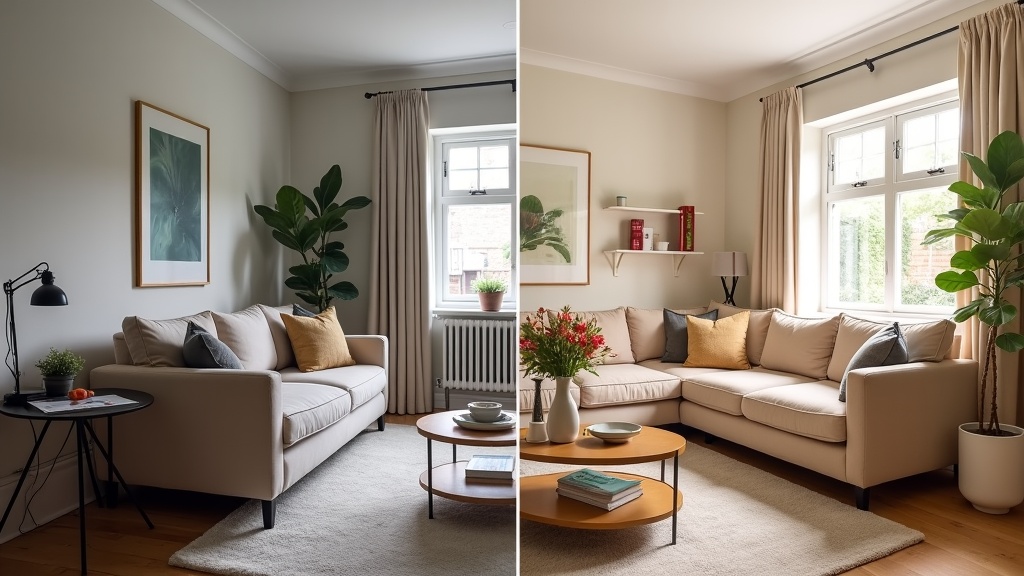
Listing gaps are the specific differences between your Airbnb and higher-performing competitors that quietly filter you out of search results, lower your ranking, or make guests choose the other listing. They're not always obvious — a missing amenity checkbox, a weak title keyword, a photo order that buries your best feature, or a pricing strategy that misses peak demand windows.
The critical insight: Airbnb's algorithm rewards listings that match guest intent. If a family searches for 'parking' and your competitor ticks the box (even if it's just street parking mentioned in a photo caption), they rank. You don't. If a business traveller filters by 'workspace' and you haven't listed your desk as a dedicated workspace amenity, you're invisible to that search — even if your listing is objectively better.
Revenue leak identification isn't about copying every competitor. It's about spotting the pattern in what converts — the amenities that trigger high-value filters, the title structures that rank for your market's most searched terms, the pricing gaps that leave money on the table. For a deeper dive into how top-performing London hosts structure their listings to capture these searches, see our guide to identifying market gaps in London.
The 4 Hidden Revenue Leaks Most Hosts Never Find
1. The 'Filter Trap': Missing Amenities That Block High-Value Searches
A guest filters by 'coffee maker'. Airbnb shows every listing that ticks that box. Yours has a cafetière on the counter, clearly visible in your kitchen photo. But you never ticked the amenity. You're filtered out — and you'll never know the guest existed.
The fix is surgical: audit your competitor's amenity lists (visible on their listing page) and cross-reference your own. Look for:
- Coffee maker — a £12 French press counts; tick it if you have one
- Dedicated workspace — desk + chair qualifies; business travellers filter by this
- Free parking — even street parking mentioned in your description should be listed
- Self check-in — lockbox or keypad; this is the most filtered amenity in UK city markets
- Essentials — towels, bed sheets, soap, toilet paper; sounds obvious, but unchecked listings exist
One Edinburgh host added 'coffee maker' and 'workspace' (both already present, just not ticked) and saw a 22% uplift in business traveller bookings within three weeks. The listing didn't change. The filter visibility did.
2. The 'Title Keyword Gap': They Rank, You Don't
Airbnb's search algorithm heavily weighs your listing title. If your competitor's title includes 'parking', 'city centre', or 'balcony' and yours doesn't — even if you have those features — they rank higher for those search terms.
Compare your title to the top five earning listings within 500 metres. Look for repeated keywords you're missing:
- Location descriptors: 'Old Town', 'Riverside', 'Northern Quarter', 'walking distance to...'
- High-value amenities: 'parking', 'balcony', 'workspace', 'fast WiFi'
- Property type specificity: 'Victorian terrace', 'new-build apartment', 'period conversion'
A Manchester host changed their title from 'Cosy 1-Bed Flat Near City' to 'Cosy 1-Bed with Parking & Balcony | 5min to Piccadilly'. Ranking for 'parking Manchester' jumped from page 3 to page 1. Bookings followed. LetGrow's free listing score includes a title analysis that benchmarks your keyword coverage against local competitors — no guesswork required.
3. The 'Pricing Pattern Blind Spot': Flat Rates vs. Dynamic Competitors
Your nightly rate might be competitive on average — but if your competitor charges £10 less midweek and £25 more at weekends, they're capturing both the budget-conscious midweek booker and the premium weekend guest. You're stuck in the middle, appealing to neither.
Pull up five high-occupancy competitors and check their calendars for the next four weeks. Look for:
- Weekend uplift — do Friday/Saturday rates spike 20-40%?
- Event-based pricing — are they raising rates around local festivals, concerts, or conferences?
- Last-minute discounts — do prices drop for gaps within 7 days?
- Seasonal patterns — are summer/winter rates adjusted, or flat year-round?
A Bristol host running a flat £85/night rate discovered competitors were charging £70 Monday–Thursday and £110 Friday–Saturday. They adopted the pattern and increased monthly revenue by 18% without changing average occupancy. For a detailed breakdown of how Bristol's top hosts structure their pricing to maximise revenue, read our Bristol market deep dive.
4. The 'Photo Order Mistake': Burying Your Best Feature
Your competitor's hero photo shows their USP — a stunning view, a parking space, a workspace. Yours shows a generic sofa. Guests scroll for three seconds before deciding whether to click. If your unique selling point is in photo 12, it's invisible.
Analyse the first five photos of your top three competitors. What do they lead with?
- Unique features (view, outdoor space, period features)
- High-demand amenities (parking, workspace, kitchen)
- Aspirational lifestyle shots (bright, spacious, styled)
Then audit your own order. If your parking space is your competitive edge and it's buried on page two, you're losing bookings to competitors who lead with it. Want a professional assessment of your photo strategy? LetGrow's listing analysis includes a photo optimisation report with recommended ordering based on your market and property type.
How to Run a Revenue-Focused Airbnb Listing Gaps Competitor Analysis

Step 1: Identify Your True Competitors (Not Just the Nearest Listings)
Your competitor isn't every listing within a mile. It's the properties competing for the same guest. A luxury two-bed loft and a budget studio flatshare are in different markets — comparing them wastes time.
Filter by:
- Property type — entire flat, private room, studio, house
- Guest capacity — sleeps 2, sleeps 4, etc.
- Price band — within 20% of your nightly rate
- Location — within 500m in cities, 2-3 miles in rural areas
- Performance — look for 4.8+ star ratings and consistent bookings (check calendar availability)
Aim for 5-10 direct competitors. Too few and you miss patterns. Too many and the data gets noisy. Our article on outperforming local hosts walks through the exact filtering process for UK markets.
Step 2: Build a Comparison Spreadsheet (The Gaps Will Jump Out)
Create a simple table with these columns:
- Listing name
- Nightly rate (midweek / weekend)
- Amenities present (focus on filter-triggering ones: parking, workspace, WiFi speed, coffee maker, self check-in)
- Title keywords (extract location terms, amenity mentions, USPs)
- Number of photos
- Hero photo subject
- Review count and rating
- Instant Book enabled (yes/no)
Now compare your row to theirs. Any column where you're the outlier is a potential revenue leak. If four competitors list 'parking' and you don't, that's a gap. If three use 'city centre' in their title and you say 'near town', that's a keyword gap. If two charge 30% more at weekends and you're flat, that's a pricing gap.
This spreadsheet is the foundation of revenue leak identification. It turns vague 'they do better than me' anxiety into a concrete action list.
Step 3: Prioritise Gaps by Revenue Impact (Fix the Biggest Leaks First)
Not all gaps matter equally. A missing cafetière tick might unlock dozens of filtered searches. A missing 'luggage rack' probably won't move the needle.
High-impact gaps (fix these first):
- Filter-blocking amenities (parking, workspace, coffee, self check-in)
- Title keywords that trigger high-volume searches (location terms, 'parking', 'balcony')
- Pricing patterns that capture weekend or event demand
- Photo order that buries your USP
Medium-impact gaps (fix if easy):
- Missing amenity details (WiFi speed, TV size, kitchen equipment)
- Review response rate (competitors reply to every review; you don't)
- Instant Book (some markets heavily favour it; others don't care)
Low-impact gaps (ignore unless you have spare time):
- Minor décor differences
- Guidebook style
- House rules wording
One London host found three high-impact gaps in 20 minutes: missing 'coffee maker' tick, no 'King's Cross' in title (despite being 400m away), and a hero photo showing a hallway instead of their roof terrace. All three fixed in one afternoon. Bookings up 31% within a month. For more on how the five key metrics explain competitor performance gaps, see our UK-focused breakdown.
The Competitor Benchmarking Mistakes That Make Things Worse
Mistake 1: Copying Superhosts Without Checking If They're Actually Earning More
The Superhost badge signals consistency, not revenue. A Superhost with 40 reviews at £60/night might earn less than a newer listing at £95/night with 12 reviews. Focus on occupancy and pricing, not badges.
Check their calendar. If they're 80%+ booked four weeks out, they're worth studying. If availability is patchy, move on — Superhost status doesn't mean market dominance.
Mistake 2: Assuming 'Similar Amenities' Means 'Same Ranking'
You both have parking. But they listed it in the title, ticked the amenity, mentioned it in the first line of the description, and captioned a photo with 'Free parking space included'. You ticked the box. Airbnb's algorithm sees repetition and prominence as stronger signals.
If an amenity is a competitive advantage, mention it everywhere — title, description, amenities list, photo caption, and house rules if relevant. Repetition isn't spam; it's clarity for both the algorithm and the guest.
Mistake 3: Ignoring the Gaps You Can't Fix (And Missing the Ones You Can)
Your competitor has a balcony. You don't. That's not a gap you can close — so stop obsessing over it. But they also have 30 photos and you have 18. They use captions on every image and you use none. They respond to reviews within 24 hours and you take a week. These are fixable gaps that compound into ranking differences.
Focus your energy on controllable variables. Physical features are fixed. Presentation, communication, and pricing are entirely within your control.
How to Turn Competitor Gaps Into Bookings This Month
Week 1: Fix Filter-Blocking Amenity Gaps
Go through your amenities list and tick every box that applies. If you have a desk, tick 'dedicated workspace'. If you have a cafetière, tick 'coffee maker'. If street parking is available (even unpermitted), mention it and tick 'free parking on premises' or in your description as appropriate.
These changes take five minutes and unlock filtered search traffic immediately. One Birmingham host added four missed amenity ticks (workspace, coffee, essentials, hangers) and saw impressions jump 40% within a week.
Week 2: Rewrite Your Title With Competitor Keywords
Extract the top three keywords from your competitor's titles (location terms, amenities, property features). Weave them into yours. Keep it natural — keyword-stuffed titles get penalised by both Airbnb and guests.
Good: 'Stylish 2-Bed with Parking & Garden | 10min to City Centre'
Bad: 'Parking Garden City Centre 2-Bed Apartment Parking Free WiFi Workspace'
The first reads like a human wrote it for humans. The second screams spam. Airbnb's algorithm prefers readability.
Week 3: Adjust Pricing to Match Competitor Patterns
If your market shows clear weekend uplift, adopt it. If event-based pricing is the norm, implement it. If you're flat and competitors are dynamic, you're leaving money on the table.
Start conservatively: 10-15% weekend uplift, 20-30% for major local events, 10% discount for gaps within three days. Monitor and adjust weekly. LetGrow's pricing analysis benchmarks your strategy against local competitors and suggests specific adjustments based on your market's patterns.
Week 4: Reorder Photos to Lead With Your USP
If parking is your edge, make it photo two or three. If your workspace is your draw for business travel, put it in the first five. If your view is stunning, it should be your hero image — not buried after twelve interior shots.
Guests make snap judgements in the first three seconds. Your photo order is your pitch. Make it count.
What LetGrow's Competitor Analysis Shows (That You Can't Spot Manually)
Manual competitor analysis works — but it's slow, subjective, and easy to miss patterns. LetGrow's AI-powered audit cross-references your listing against local market data to surface the specific gaps costing you bookings.
You'll see:
- Missing amenities your competitors list (with filter impact scores)
- Title keyword gaps and recommended phrasing based on high-ranking local listings
- Pricing positioning vs. market median, with weekend/event gap analysis
- Photo benchmarking — are you under or over the local average? What's missing from your shot list?
- SEO and ranking signals Airbnb uses that your competitors are nailing
The analysis is free, takes 60 seconds, and gives you a prioritised action plan with revenue leak identification built in. No spreadsheets, no guesswork — just a clear list of what to fix first. Get your free Airbnb listing score here.
Market Positioning Gaps: When 'Good Enough' Isn't Good Enough
Even if your listing looks competitive on paper, market positioning gaps can quietly erode your bookings. These are the intangible differences that don't show up in amenity lists or pricing — but guests feel them.
Examples:
- Response time — competitors reply in under an hour; you take half a day. Airbnb's algorithm penalises slow responses.
- Acceptance rate — you decline 20% of bookings (maybe for good reasons); competitors accept 95%+. Lower acceptance = lower ranking.
- Review recency — competitors have reviews from the last fortnight; your most recent is two months old. Fresh reviews signal active, reliable hosting.
- Cancellation rate — even one host-initiated cancellation in the last year tanks your ranking vs. zero-cancellation competitors.
These gaps are harder to fix but critical for long-term competitiveness. If your tangible listing (photos, amenities, price) is solid but you're still underperforming, look at your hosting metrics. Airbnb's algorithm is watching. For a comprehensive guide to the metrics that matter most, see our breakdown of hidden revenue gaps top hosts exploit.
Frequently Asked Questions
How often should I run an Airbnb listing gaps competitor analysis?
Run a full competitor audit every quarter or when you notice a drop in bookings. Markets shift — new listings launch, competitors adjust pricing, seasonal demand changes. A quarterly review keeps you aligned with what's working now, not what worked six months ago. Between audits, spot-check your top three competitors monthly for pricing or amenity changes.
What's the fastest way to identify revenue leaks in my Airbnb listing?
Compare your amenities list to five high-performing competitors within 500 metres. Any filter-triggering amenity they have and you don't (parking, workspace, coffee maker, self check-in) is a likely revenue leak. These are quick wins — ticking a box or adding a £15 French press can unlock dozens of filtered searches immediately.
Can I copy a competitor's title and description?
No. Airbnb penalises duplicate content, and guests spot generic copy. Instead, identify the pattern in high-performing titles — which keywords appear repeatedly, how location is described, which amenities are emphasised — and apply that structure to your unique listing. Use competitor analysis for insight, not plagiarism.
Do I need to match every competitor's amenities to rank well?
No. Focus on the amenities that trigger high-value filters in your market. In city centres, that's usually parking, workspace, and self check-in. In rural areas, it might be outdoor space or pet-friendly policies. Match the amenities your target guest filters by — ignore the rest unless they're easy additions.
How do I know if my pricing is too high or too low compared to competitors?
Check the calendars of five similar listings. If they're 80%+ booked four weeks out and you're at 40%, your pricing (or listing quality) is off. If you're both similarly booked but they charge 15% more, you're underpricing. If you're booked solid and they have gaps, you might be underpricing or they're overpriced. Calendar availability is the clearest pricing signal.
What if my listing is objectively better but still underperforms competitors?
Better amenities don't guarantee better bookings if your listing isn't discoverable. Check: Are you missing title keywords they rank for? Are filter-triggering amenities ticked? Is your hero photo compelling? Is Instant Book enabled if competitors use it? Superior quality only converts if guests find you first — and that's where listing optimisation and competitor gap analysis matter most.
Stop Guessing. Start Closing Gaps.
The difference between a listing that earns £1,200/month and one that earns £2,000/month often comes down to a handful of fixable gaps: a missing amenity tick, a weak title keyword, a pricing pattern that misses peak demand. Airbnb listing gaps competitor analysis isn't about obsessing over every rival — it's about spotting the patterns in what converts and closing the gaps that cost you bookings.
You don't need to be perfect. You need to be better where it counts — and that starts with knowing where you stand. Ready to see exactly where your listing is leaking revenue? Get your free Airbnb performance score from LetGrow — it's a 60-second audit that benchmarks your listing against local competitors and shows you precisely what to fix first.