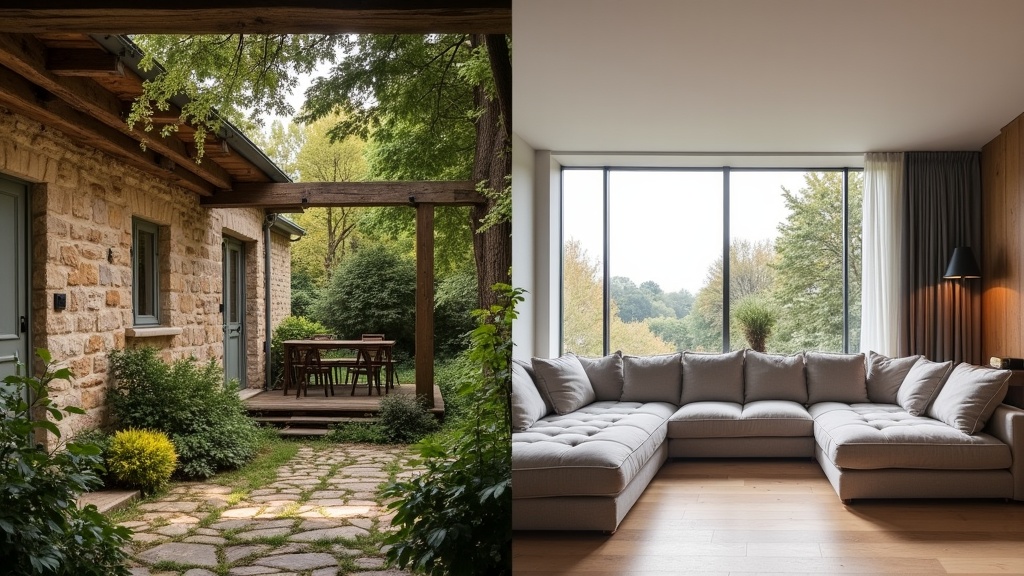
Why Property Type Choice Matters More Than Location for Airbnb Revenue
Most new hosts obsess over postcodes and proximity to tourist hotspots, but quietly overlook the single biggest revenue driver: property type selection. A cottage in rural Devon can dramatically outperform a central London flat—not despite its location, but because of how Airbnb's algorithm and guest behaviour reward certain property types. Understanding Airbnb property type cottage flat revenue differences isn't about which is 'better'—it's about which aligns with your market, your guest profile, and your earning goals.
Cottages and flats occupy opposite ends of the short-term rental spectrum. Cottages typically command higher nightly rates, attract longer stays, and appeal to families and groups seeking privacy and character. Flats excel in urban markets, turnover quickly, and suit solo travellers and business guests. But the revenue gap isn't just about price per night—it's about occupancy patterns, seasonal resilience, running costs, and how Airbnb ranks you in search. Before you commit to a property, let's break down exactly how these two types perform in the UK market, where the hidden costs live, and which one is likely to earn you more.
If you're still weighing up property types before launching your listing, our complete guide to starting an Airbnb in the UK walks through every decision point from property selection to your first booking.
What Defines a Cottage vs Flat on Airbnb? (And Why It Matters for Search)
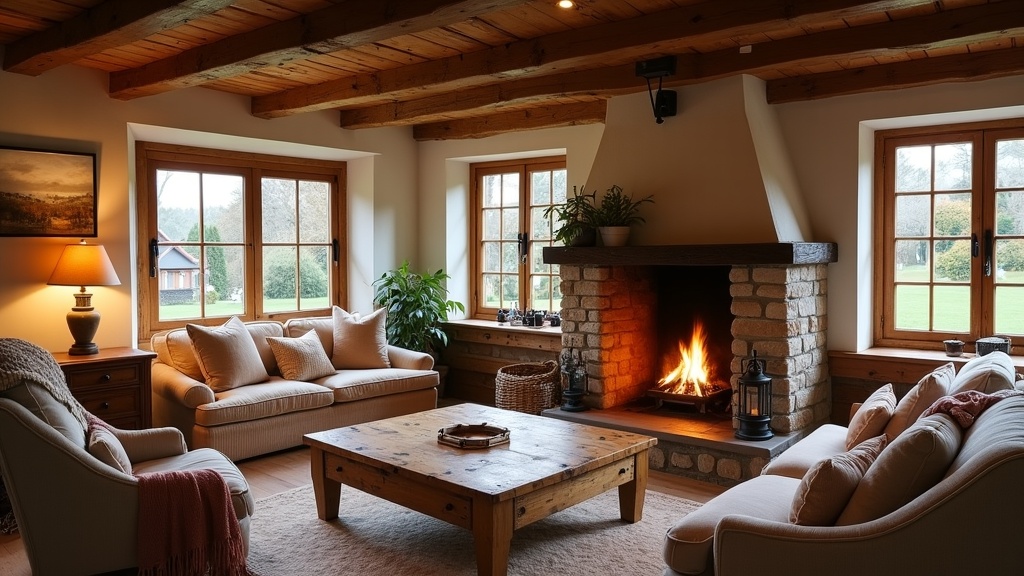
Airbnb property type isn't just a label—it's a filter. Guests searching for a 'cottage' are actively excluding flats, and vice versa. The property type you select determines which searches your listing appears in, which guest demographics see you first, and how the algorithm weighs your relevance. Getting this wrong costs you visibility before you've even optimised a single word of your title.
A cottage on Airbnb is typically a standalone dwelling, often in a rural or semi-rural setting, with character features like exposed beams, stone walls, or a private garden. It's self-contained, usually single-storey or low-rise, and marketed on charm, privacy, and setting. Guests searching for cottages expect tranquillity, outdoor space, and a 'retreat' feel—they're planning longer stays, family gatherings, or romantic getaways.
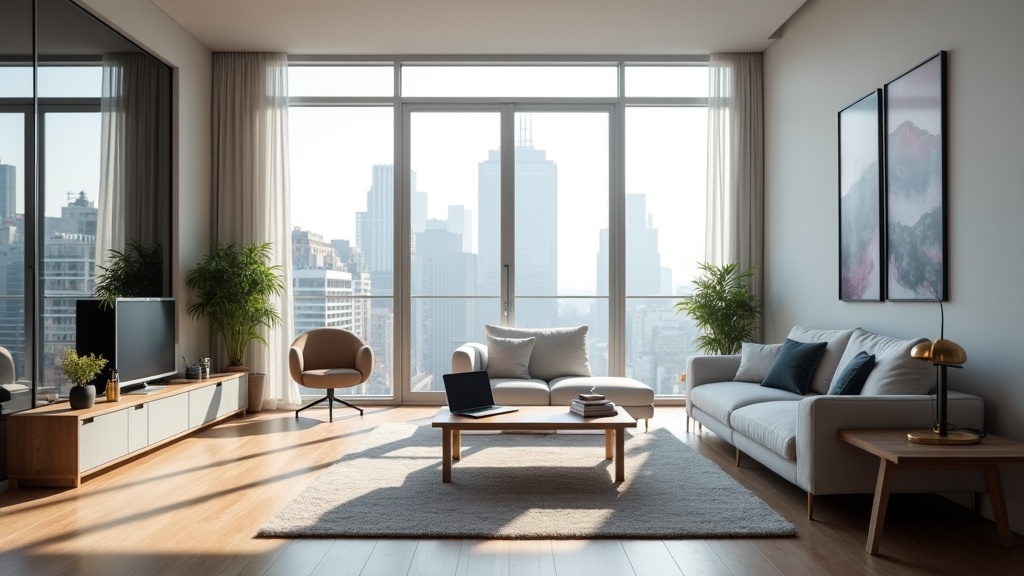
A flat (or apartment) is a self-contained unit within a larger building, typically urban or suburban, without private outdoor space beyond a balcony. Flats are selected by guests prioritising location, convenience, and price—they're after city centre access, public transport links, and functional amenities like fast Wi-Fi and workspace. Flats rarely compete on 'character'; they win on efficiency and positioning.
When you list your property, Airbnb asks you to choose from 30+ property types. Selecting 'cottage' or 'flat' immediately signals to the algorithm what kind of guest experience you're offering, and filters you into entirely different search result pools. A countryside cottage listed as a 'flat' will hemorrhage bookings because it's being shown to the wrong audience. Similarly, a studio apartment listed as a 'cottage' will confuse guests and tank your conversion rate.
How Airbnb's Algorithm Treats Cottages Differently to Flats
Airbnb's ranking algorithm doesn't treat all property types equally. Cottages benefit from lower competition density in rural and semi-rural markets, meaning fewer comparable listings fighting for the same search impressions. Flats, especially in cities like London, Manchester, and Edinburgh, face brutal competition—hundreds of near-identical listings within a 2-mile radius, all vying for the same business traveller or weekend tourist.
Cottages also benefit from higher average booking values, which Airbnb's algorithm favours because it increases platform revenue per transaction. A £600 weekend cottage booking generates more commission than six £100 flat bookings, even if the occupancy rate is lower. The algorithm quietly rewards listings that drive higher transaction values, pushing them up in search results even if their review count or response rate is comparable to cheaper alternatives.
Airbnb Cottage Earnings Potential: What the Data Shows
Cottages consistently command higher nightly rates than flats in comparable UK markets, but that headline figure masks a more complex revenue picture. A three-bedroom cottage in the Cotswolds might achieve £180–£250 per night in peak season, while a three-bedroom flat in Bristol city centre hovers around £120–£160. On the surface, the cottage wins—but occupancy, seasonality, and running costs tell a different story.
Occupancy rates for cottages are typically 10–20 percentage points lower than urban flats, especially outside school holidays and summer months. A cottage might achieve 65% annual occupancy, while a well-optimised city flat can sustain 75–85%. That gap erodes the nightly rate advantage. A cottage at £200/night with 65% occupancy earns roughly £47,450 annually. A flat at £140/night with 80% occupancy brings in £40,880—closer than you'd think, and the flat requires less seasonal marketing effort.
Where cottages excel is average stay length. Cottage guests book 3–7 night stays, reducing turnover costs (cleaning, laundry, restocking) and improving your time efficiency. Flats average 1.5–3 nights, meaning more frequent turnovers, higher housekeeping bills, and more admin work for the same revenue. If you're self-managing and value your time, longer stays significantly improve your effective hourly rate.
Peak Season vs Off-Peak: Where Cottages Shine
Cottages are seasonally volatile but winter-resilient in the right markets. Coastal and countryside cottages see 40–60% of annual revenue concentrated in May–September, with a secondary spike around Christmas and New Year for 'cosy getaway' bookings. Flats, by contrast, maintain more consistent year-round demand, especially in cities with business travel, university terms, and cultural events spread across the calendar.
If your cottage is in a winter-friendly location—think log burners, proximity to Christmas markets, or dramatic coastal scenery—you can buck the seasonal dip. A well-marketed cottage with a wood burner and dog-friendly policy can achieve 70–80% occupancy in November and December, when most rural hosts see bookings collapse. Urban flats don't experience this dramatic seasonal swing, but they also lack the winter romance premium that lets cottage hosts charge £220/night in February half-term.
Flat vs House Rental Income: Urban Performance Comparison
In cities, flats dominate Airbnb revenue because they match guest expectations. The typical UK city Airbnb guest is either a solo traveller, a couple, or a small business group—demographics that prioritise location, budget, and convenience over space and character. A two-bedroom flat in Shoreditch or the Northern Quarter will outperform a two-bedroom house in the same postcode, simply because flats are easier to access (often with lifts), cheaper to heat, and perceived as more secure in urban environments.
Flats also benefit from lower utility and maintenance costs per booking. A 600 sq ft flat costs £40–£70 per month to heat year-round, while a detached house can easily exceed £150–£200. Council tax bands are typically lower for flats, and communal building insurance is often cheaper than standalone property insurance. These operational savings compound over dozens of bookings, improving your net margin even if gross revenue is comparable to a house.
However, flats face stricter regulation in many UK cities. London enforces a 90-night annual limit for entire-home short-term lets unless you have planning permission. Edinburgh requires a short-term let licence and compliance with fire safety standards that disproportionately affect tenement flats. Manchester is introducing a registration scheme in 2025. Houses in suburban or rural areas face fewer restrictions, giving you more operational flexibility and fewer compliance costs.
Noise, Neighbours, and the Hidden Risk of Flat Hosting
Flats carry a structural risk that cottages rarely face: neighbour complaints. A single noise complaint can trigger a landlord dispute, strata committee investigation, or Airbnb suspension. Even if your guests are respectful, living in close proximity to permanent residents creates friction—especially in buildings where short-term letting isn't normalised. Cottages, by contrast, offer privacy buffers that reduce complaint risk and give you operational peace of mind.
If you're managing a flat in a multi-occupancy building, invest in a noise monitoring device (not a camera—just decibel tracking) and set clear house rules around quiet hours. Many hosts also add soundproofing to bedroom doors and avoid accepting same-day bookings from local guests, which statistically correlate with party risk. For a deeper dive into managing city flats vs suburban houses, see our apartment vs house Airbnb earnings comparison.
Property Type Performance Comparison: Occupancy, ADR, and Net Margin
Let's compare two real-world scenarios: a two-bedroom cottage in rural North Yorkshire vs a two-bedroom flat in Leeds city centre, both optimised to the same standard (professional photos, dynamic pricing, 4.9★ rating, Superhost status).
North Yorkshire Cottage:
- Nightly rate: £165 (weekday), £195 (weekend)
- Occupancy: 62% annually (75% May–Sept, 45% Oct–April)
- Average stay: 4.2 nights
- Gross annual revenue: £42,800
- Running costs (utilities, maintenance, council tax): £6,200
- Net margin: £36,600
Leeds City Centre Flat:
- Nightly rate: £105 (weekday), £125 (weekend)
- Occupancy: 78% annually (consistent year-round)
- Average stay: 2.1 nights
- Gross annual revenue: £35,900
- Running costs (utilities, maintenance, service charge): £4,100
- Net margin: £31,800
The cottage grosses 19% more but nets only 15% more—and requires significantly more time per booking due to longer guest communications, detailed check-in instructions, and property-specific guidance (septic tanks, oil heating, rural broadband). The flat generates less revenue but demands less time and carries lower fixed costs, improving your effective hourly rate if you're self-managing.
Neither is 'better'—it depends on whether you optimise for absolute revenue or operational simplicity. If you're running multiple properties or have another full-time job, flats scale more easily. If you're comfortable with seasonality and enjoy curating a characterful guest experience, cottages reward the extra effort with higher earnings and longer, lower-stress bookings.
Startup Costs: Furnishing a Cottage vs Flat for Airbnb
Furnishing costs differ dramatically between property types, and it's not just about square footage. Cottages require character-appropriate furnishing to meet guest expectations—think farmhouse tables, vintage textiles, and quality soft furnishings that photograph well and feel 'retreat-like'. Cutting corners with flat-pack furniture in a £180/night cottage will tank your conversion rate and review scores.
A typical two-bedroom cottage requires £4,500–£7,000 in furnishings to achieve a bookable standard, including:
- Living room: sofa, armchairs, coffee table, lamps, rugs, throws, artwork (£1,200–£1,800)
- Kitchen: dining table, chairs, cookware, crockery, glassware, small appliances (£800–£1,200)
- Bedrooms: beds, mattresses, bedding, wardrobes, bedside tables, lighting (£1,500–£2,200)
- Bathroom: towels, toiletries, storage, mirrors (£300–£500)
- Outdoor: garden furniture, BBQ, outdoor lighting (£700–£1,300)
A two-bedroom city flat, by contrast, can be furnished to a competitive standard for £3,000–£4,500, focusing on functional minimalism rather than character. Guests expect clean lines, good Wi-Fi, a workspace, and efficient storage—not exposed beams and vintage charm. For detailed costings by property type, see our furnishing an Airbnb property budget guide.
Don't underestimate outdoor space costs for cottages. Garden furniture, lighting, and maintenance (lawn mowing, hedge trimming, seasonal planting) add ongoing costs that flats avoid entirely. However, outdoor space is also one of the highest-value amenities in guest filters—cottages with private gardens achieve 15–25% higher occupancy than those without, making the investment worthwhile if your property supports it.
Which Property Type Ranks Higher in Airbnb Search?
Airbnb's search algorithm doesn't inherently favour cottages or flats—it favours relevance to the guest's search intent. A guest filtering for 'entire place' + 'pet-friendly' + '3 bedrooms' + 'rural location' will see cottages rank highest because they match the intent profile. A guest searching 'city centre' + 'instant book' + 'workspace' will see flats dominate, regardless of how well-optimised the cottage listings are.
However, cottages benefit from lower keyword competition in long-tail searches. A title like 'Cosy Cotswolds Cottage with Log Burner & Garden' faces fewer competing listings than 'Modern Manchester City Centre Apartment with Parking'. Long-tail, intent-rich keywords are easier to rank for in rural markets, giving cottage hosts an SEO advantage even with fewer reviews or bookings.
Flats must compete on operational excellence—instant book, fast response times, flexible check-in, immaculate photos, and competitive pricing. In saturated urban markets, a 4.85★ flat will lose to a 4.92★ flat every time, because guests have endless comparable options. Cottages compete on uniqueness and emotional appeal, which is harder to replicate but also harder to optimise systematically.
How LetGrow Helps Both Property Types Rank Higher
Whether you're running a cottage or flat, listing optimisation is the fastest lever to improve search ranking. Airbnb's algorithm rewards listings with high conversion rates (views → bookings), which is driven by title clarity, photo quality, competitive pricing, and amenity accuracy. A poorly optimised cottage will lose to a mediocre flat in the same market, simply because the algorithm can't match it to relevant searches.
If you'd like an expert assessment of your listing with specific suggestions to improve, LetGrow's free listing score shows you exactly where you stand—whether you're running a cottage, flat, house, or any other property type. The analysis covers title SEO, photo sequencing, pricing strategy, and amenity gaps, giving you a prioritised action plan to boost your ranking and revenue.
Cottage or Flat? Matching Property Type to Your Hosting Goals
The right property type depends on your financial goals, time availability, and risk tolerance—not which type earns more in abstract. Here's a decision framework:
Choose a cottage if you:
- Own or can afford a rural/semi-rural property with character features
- Can tolerate seasonal revenue swings (40–60% of income in 5–6 months)
- Prefer fewer, longer bookings with less frequent turnover
- Want to command premium nightly rates and attract family/group bookings
- Are comfortable with higher utilities, maintenance, and outdoor upkeep
- Can invest £5,000–£8,000 in character-appropriate furnishings
Choose a flat if you:
- Want consistent year-round occupancy with predictable cash flow
- Prefer lower running costs (utilities, council tax, maintenance)
- Need to be in or near a city for guest demand and transport links
- Value operational simplicity (shorter stays, faster turnovers, easier access)
- Can compete on price, speed, and service rather than uniqueness
- Want to scale to multiple properties (flats are easier to systemise)
There's no universally 'better' choice—both can be highly profitable if matched to the right market and optimised correctly. A badly run cottage in a saturated tourist village will underperform a well-optimised flat in a tier-two city. Conversely, a characterless flat in a competitive urban market will struggle against a thoughtfully presented cottage in a high-demand rural area.
Common Mistakes When Choosing Between Cottage and Flat
New hosts often make emotional property decisions rather than data-driven ones. Falling in love with a chocolate-box cottage in the Lake District is understandable, but if the local market is oversupplied with similar listings and you're relying on consistent monthly income, you're setting yourself up for cash flow stress.
Mistake 1: Ignoring local competition density. Before committing to a property type, search Airbnb for comparable listings in your target area. If there are 80+ three-bedroom cottages within 5 miles, all priced £150–£200/night, you're entering a saturated market where only the top 20% will achieve strong occupancy. A well-differentiated flat in a nearby town with lower competition might outperform.
Mistake 2: Underestimating turnover costs for flats. High occupancy sounds attractive until you calculate the cost of cleaning a flat 150+ times per year at £40–£60 per clean. That's £6,000–£9,000 annually before laundry, restocking, and wear-and-tear replacements. Cottages with longer average stays dramatically reduce this cost per revenue pound earned.
Mistake 3: Choosing a cottage without outdoor space. Guests searching for cottages expect private gardens, patios, or at least a dedicated outdoor seating area. A cottage without outdoor access will lose bookings to comparable listings that offer it, and you'll struggle to justify premium pricing. If your 'cottage' lacks outdoor space, consider listing it as a 'house' or 'bungalow' instead to better match guest expectations.
Mistake 4: Ignoring regulatory risk in urban flats. Many new hosts buy city-centre flats without researching local short-term let regulations, only to discover 90-night caps, licensing requirements, or building management clauses that restrict or ban Airbnb. Always check local authority planning policies and your lease or freehold terms before purchasing a flat for short-term letting.
Getting Your First Listing Live: Cottage and Flat Setup Differences
The setup process differs significantly between property types, especially around access, utilities, and guest communication. Cottages typically require detailed check-in instructions—key safes, rural directions (postcode accuracy is often poor), parking guidance, heating and hot water systems (oil, LPG, or solid fuel), and septic tank etiquette. Flats are simpler: a key safe or lockbox, building entry codes, and lift access if applicable.
Cottages also need more comprehensive local area information—nearest shops, pubs, attractions, and mobile signal warnings (rural broadband and 4G can be patchy). Flat guests assume urban infrastructure: they expect fast Wi-Fi, nearby supermarkets, and reliable public transport, so your guidebook can be more streamlined.
If you're setting up your first listing and want a step-by-step walkthrough, our first Airbnb listing setup guide covers everything from selecting the right property type in the Airbnb dashboard to writing your first title and description. For cottages, pay extra attention to amenity accuracy—guests filter heavily for fireplaces, gardens, and pet-friendliness, so missing these in your listing setup will cost you visibility.
Should You Offer Self Check-In for Cottages and Flats?
Self check-in is essential for flats in competitive urban markets—it's a filterable amenity that many business and solo travellers prioritise. Without it, you'll lose bookings to comparable listings that offer it. For cottages, self check-in is less critical but still valuable, especially if you're hosting guests arriving outside typical office hours or if your property is remote.
The mechanics differ: flats usually use a simple lockbox or smart lock on the apartment door, while cottages may need a key safe mounted discreetly near the entrance, plus detailed instructions for gates, outbuildings, or secondary access points. For a detailed breakdown of what self check-in setup works best for different property types, see our guide on what Reddit hosts recommend for Airbnb self check-in.
Final Verdict: Cottage vs Flat Revenue Potential
There's no universal winner in the Airbnb property type cottage flat revenue comparison—the highest earner is the one that matches your market, guest demand, and operational capacity. Cottages reward hosts who can tolerate seasonality, invest in character, and attract longer-stay guests willing to pay premium rates. Flats reward hosts who optimise for consistency, operational efficiency, and urban guest demand.
If you're still deciding which property type to invest in, start by researching local demand and competition. Search Airbnb in your target area, filter by property type, and analyse the top-performing listings: what's their pricing, occupancy, review count, and amenity offering? Look for gaps—undersupplied property types or guest demographics that aren't being served well by existing listings.
Once you've chosen a property and listed it, the real revenue driver is optimisation. A poorly titled, badly photographed cottage will lose to a well-optimised flat every time, regardless of inherent property advantages. Want a professional eye on your listing? LetGrow analyses your title, photos, pricing, and amenities for free—no obligation, just actionable insights to help you maximise revenue, whether you're running a cottage, flat, or anything in between.
Frequently Asked Questions
Do cottages earn more than flats on Airbnb in the UK?
Cottages typically command higher nightly rates (£165–£250 vs £105–£160 for comparable flats) but achieve 10–20% lower occupancy, especially outside peak summer months. Net annual revenue is often similar, with cottages earning £35,000–£50,000 and well-optimised urban flats earning £30,000–£45,000. Cottages excel in longer stays and premium pricing; flats win on consistency and lower running costs.
Which property type is easier to manage: cottage or flat?
Flats are generally easier to manage due to shorter check-in processes, simpler utilities, and lower maintenance requirements. Cottages require more detailed guest communication (rural access, heating systems, outdoor space guidance) and higher upkeep (gardens, septic tanks, character features). However, cottages benefit from longer average stays (3–7 nights vs 1.5–3 nights), reducing turnover frequency and admin time per booking.
Are there more regulations for short-term letting flats or cottages?
Flats face stricter regulation in UK cities, including London's 90-night annual cap, Edinburgh's licensing scheme, and emerging registration requirements in Manchester and other councils. Cottages in rural or suburban areas typically have fewer restrictions, though planning permission may still be required for intensive use. Always check local authority rules and lease terms before listing a flat.
What are the startup costs for furnishing a cottage vs flat?
A two-bedroom cottage requires £4,500–£7,000 in furnishings to meet guest expectations for character, comfort, and outdoor space. A comparable city flat can be furnished for £3,000–£4,500, focusing on functional minimalism and urban convenience. Cottages also incur higher ongoing costs for utilities, garden maintenance, and property upkeep, while flats benefit from lower council tax and service charges.
Which property type ranks higher in Airbnb search results?
Neither property type has an inherent ranking advantage—Airbnb's algorithm prioritises relevance to guest search intent. Cottages benefit from lower competition in long-tail, rural searches and higher transaction values. Flats must compete on operational excellence (instant book, response time, reviews) in saturated urban markets. Both can rank highly if optimised correctly for their target audience.
Should I choose a cottage or flat for my first Airbnb?
Choose based on your financial goals and risk tolerance. Cottages suit hosts who can tolerate seasonal income, prefer longer stays, and want premium pricing. Flats suit hosts who need consistent cash flow, value operational simplicity, and can compete on price and service. Research local competition density and guest demand in your target area before committing to either property type.